What competencies should every evaluator have?
I recently participated in a Webinar with the American Evaluation Association (AEA) where AEA Treasurer, Susan Tucker, and Task Force Chair, Jean A. King, shared about the development of evaluator competencies for AEA. It’s been a three-year process and the results are promising.
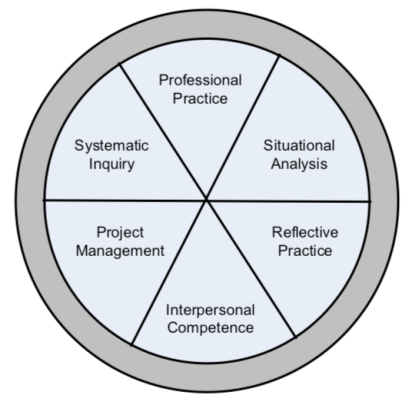
The new AEA competencies are an important addition to the Essential Competencies for Program Evaluators, which was published by Laurie Stevahn and others back in 2005 (See reference below). The six domains of that original competencies list were professional practice, situational analysis, reflective practice, systematic inquiry, project management, and interpersonal competence:
The five domains of the new AEA competencies include professional practice, methodology, context, planning and management, and interpersonal:

While the new domains map on fairly well to the previous framework, there appears to be some important nuance. I’ll post more once the specifics of the report are published, but in the meantime I will say I was very impressed with the presentation of the new domains.
They placed a strong focus on methodological rigor in evaluations recognizing that the evaluation context is inextricably tied to quality and rigor. The specific competencies in the domain of context that caught my mind were 3.4 – “Attends to systems issues within the context” and 3.7 – “Clarifies diverse perspectives, stakeholder interests, and cultural assumptions.” These represent a powerful shift in the evaluation world from overly simplistic causal models to understanding the complexity inherent in evaluating change efforts within complex systems.
While I won’t be able to attend the annual meeting next month in Cleveland, I’m looking forward to attending virtually. Some great things are happening in the evaluation world.
Stevahn, L., King, J. A., Ghere, G., & Minnema, J. (2005). Establishing essential competencies for program evaluators. American Journal of Evaluation, 26(1), 43-59.
 Oliver S. Crocco