The Importance of Early Experiences in Scholarship
6 February 2022
Out for a run in my Baton Rouge neighborhood, I listen to a podcast by author and journalist Sebastian Strangio about his updated book on Hun Sen and Cambodia published by Yale University Press. I don’t typically listen to podcasts while running, but the lack of trails within running distance from my house and the drudgery of running up and down paved streets makes it a necessity. I miss the days of running for hours on the adventurous trails of Rock Creek Park in DC or around Doi Suthep in Chiang Mai. I trudge along the sidewalks with their cracks and ant hills as the Louisiana winter wind (about 13 degrees celsius) blows on my face. I listen to Strangio describe his early experiences after university when he moved to Phnom Penh and got involved in journalism. Even though he was young and inexperienced, he was given a lot of opportunity at the Phnom Penh Post and grew immensely as an author/journalist during his initial three-year stint.
Part of Strangio’s incredible success as an author is no doubt due to his brilliance (in the podcast, he gives lengthy, sophisticated responses jam-packed with detail). Still, I can’t help but think about the importance of those early professional experiences that gave him a complex cross-cultural environment full of challenges to cultivate his voice and sense of the world. He was given opportunities as a journalist in those days that most aspiring journalists in places like the US or Australia wouldn’t get for years.
Before leaving the house to go on my run I had just put down the autobiography of Charles “Biff” Keyes of the University of Washington who recently passed away. Born in 1937, Biff studied anthropology at Cornell and first went to Thailand in 1962 (just before his 25th birthday) to collect data for his dissertation. It’s so fun to read the story of Biff’s life as he mentions his influential early experiences in Thailand. The book is full of his interactions with people like David Wyatt and Konrad Kingshill (the latter of whom was instrumental in establishing Payap University where I worked for four years).
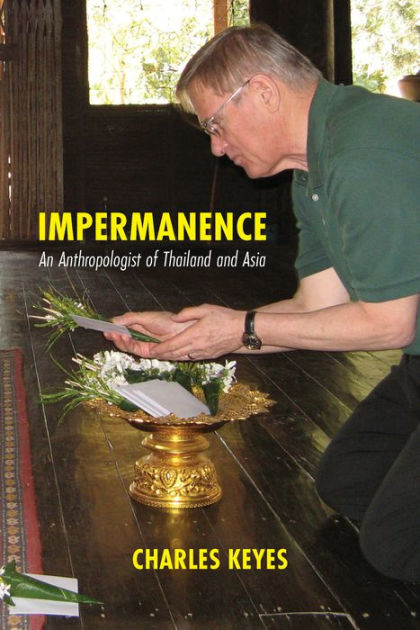
While I never had the chance to meet Biff Keyes and haven’t yet met Sebastian Strangio, their stories remind me of my own experience moving to Chiang Mai, Thailand at the age of 22. Having graduated in 2008 into a terrible job market, I spent the year working at my church and volunteering in the community and then moved to Thailand the spring of 2009. During my first two years there, I was given opportunities at Payap University to create programs, develop residential life policy, and even teach courses. Those experiences stretched and challenged me personally and professionally. After completing my master’s degree, I returned to Payap for two more years. I was fully thrown into the world of university life. I taught a full slate of courses in the International College, worked as the Head of International Campus Life, and contributed to a large-scale development project along the Thai-Myanmar border and inside Myanmar. Thankfully I kept a blog during my time there, which I occasionally crack open.
At the end of my run, I turn the corner and walk the final stretch to cool down and avoid getting sweat all over my kids. Eager to return to Southeast Asia, I feel somewhat like my wings are clipped by the pandemic, family, and the tenure track. Life isn’t quite as simple or free as it was. Running in straight lines around paved streets instead of through endless trails feels like an apt metaphor. I don’t let it get me down, though. I remind myself of how grateful I am to have had those four years in Thailand to shape my thinking, build relationships (including with my incredible wife!), and set me on the academic path. The last 4 years at LSU have allowed us to build a family and given me time and space to develop my scholarship. It’s been perfect. And I know it’s only a matter of time until I’m back.
Onward.
 Oliver S. Crocco