There and Back Again
Posted on August 11, 2022 Leave a Comment
11 August 2022
My apologies to diehard Tolkien fans for borrowing the title of Bilbo Baggins’ book of adventures for a post about our trip to Thailand May-July 2022. My guess is you’ll understand why I chose this title by the end of this post.
We left for Thailand on May 18. I got the kids and Khai settled in Chiang Rai and then returned to Bangkok to work on final preparations before the students arrived for our Global Leadership in Thailand study abroad course. After taking great measures to avoid COVID for the last two years, I tested positive on the second day of the course in Bangkok and had to quarantine in a hotel-turned-hospital (“hospitel”) on the outskirts of town for ten days. I am grateful for my friends and colleagues at LSU, Eddie and Shane, who managed the study abroad program in my stead. They were incredible. We talked multiple times throughout the day to coordinate events, cover all the details, and communicate with our organization/site visits. I am also grateful for my colleague at Chulalongkorn University, Pim, who dropped off delicious treats for me at my hospitel.

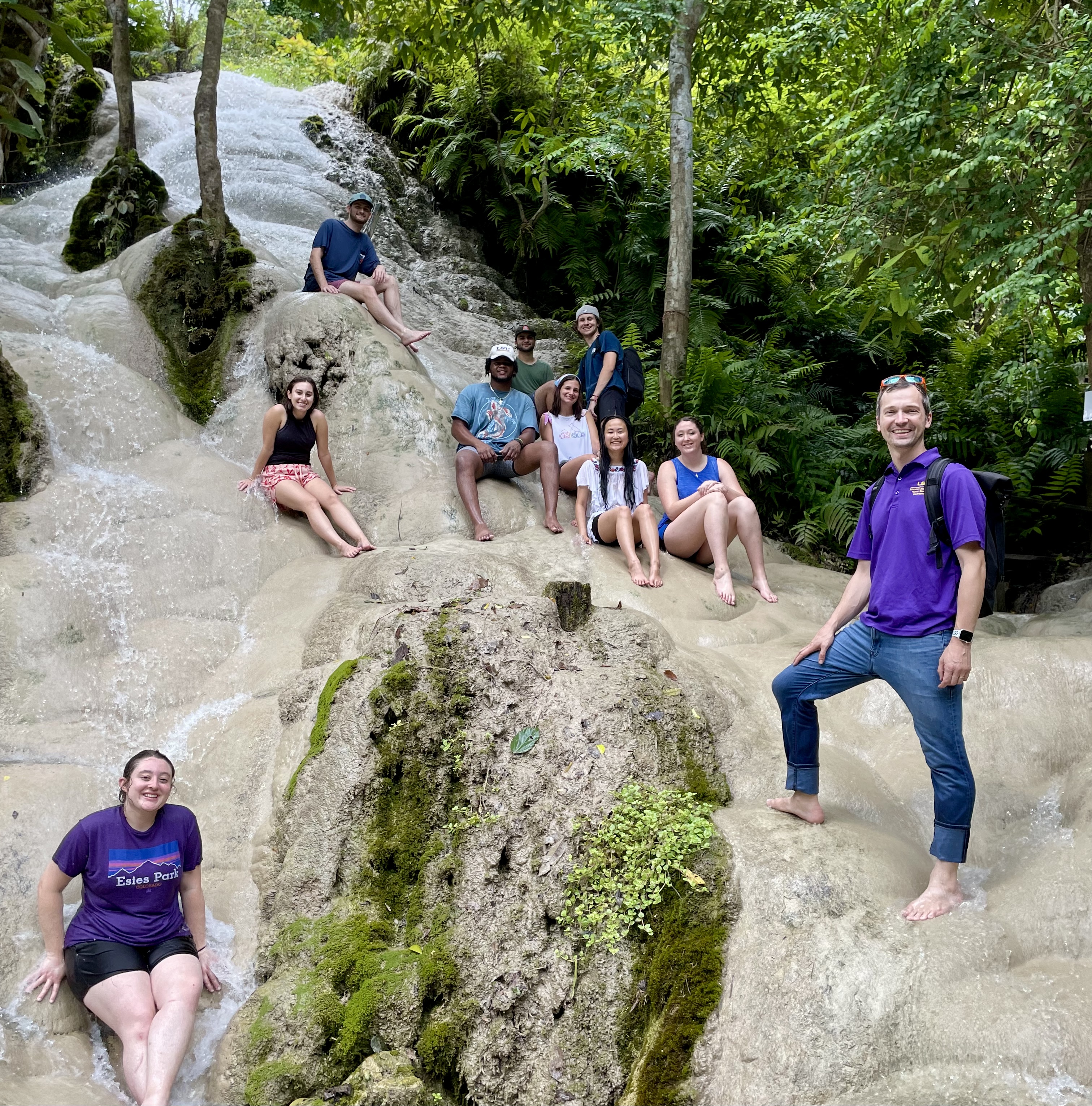
Several of our hosts cancelled or asked to move to Zoom given my diagnosis, which was understandable but disappointing nonetheless. I felt very bad about the chance that any of our students or Thai people we interacted with might also test positive. The only saving grace of the story was that Thailand’s strict mask policy meant that we wore masks at all times and no one else in our program tested positive in the subsequent few days of the program. I rejoined the group in Chiang Mai the morning of June 2, which gave me 5 days with the students and included hiking up Doi Suthep along the Pilgrim’s Trail, a picnic at the Nam Tok Bua Thong (Sticky Waterfall), Moo Kra Ta (Thai BBQ), and food at some of my favorite spots.
There’s no way around it, though. It was a hard trip.
Khai and the kids were troopers in Khai’s village during the study abroad program but they also ended up getting COVID, which was difficult. Thankfully, Khai’s sister had just recovered from COVID, so she was able to serve as a caretaker. Aden grew to love her omelettes. Still, being in a new environment (new people, new house, new food) was a challenge for the kids, and getting COVID made it much harder. We invested in an AC unit for their bedroom as well as a smart TV, which helped in their recovery.
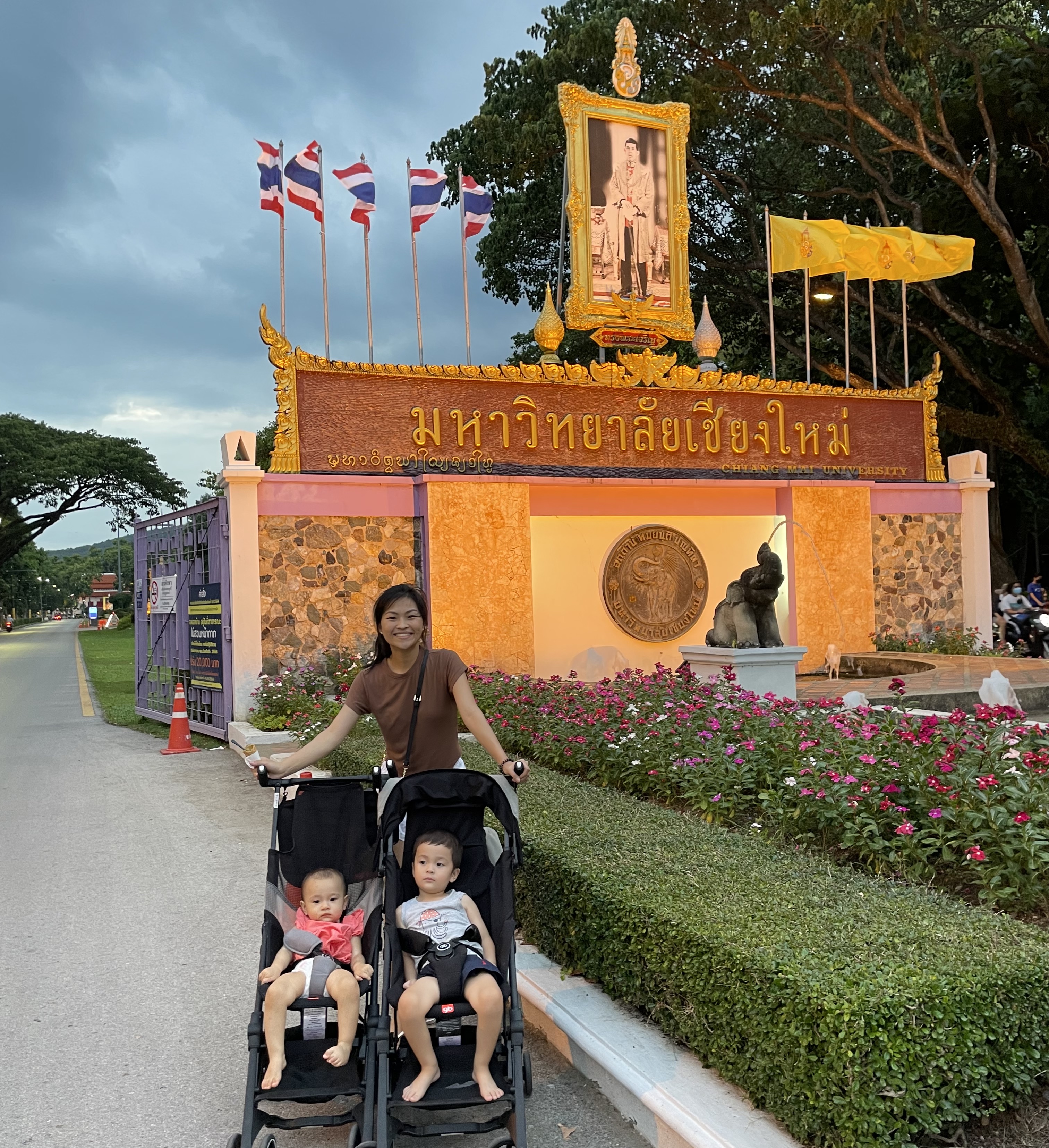
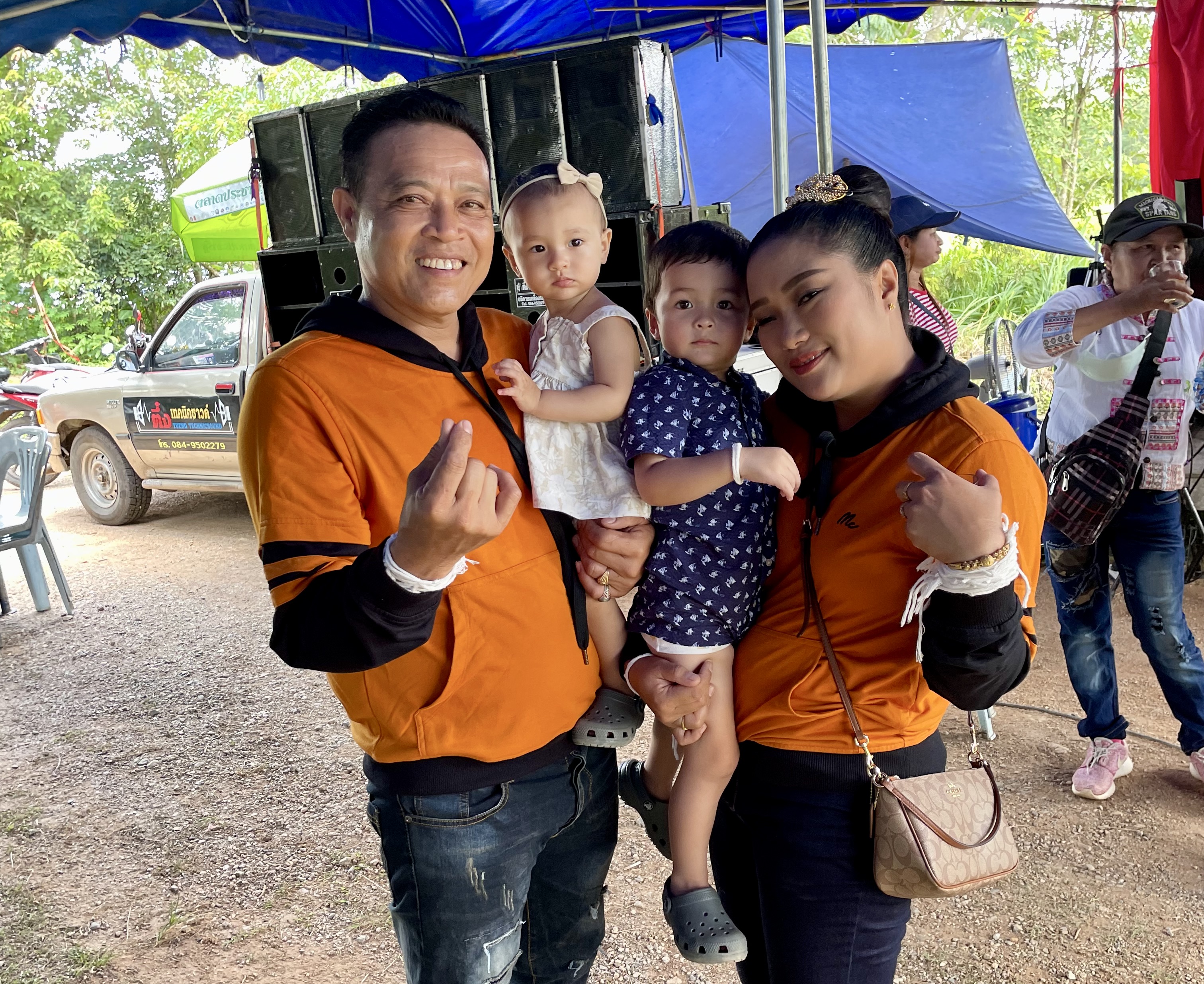
At the end of the study abroad program, two of my students tested positive for COVID, which meant I had to stay in Chiang Mai with them for their 10-day quarantine. Khai and the kids joined me in Chiang Mai while I delivered food to the students and helped with other things like hospital needs. A third student also tested positive but they were in the south of Thailand and stayed there for their quarantine. One of the students’ parents even wrote about the experience in the newspaper. We then traveled back to Chiang Rai, which was perhaps the highlight of our adventure. We had a solid three weeks in Khai’s village soaking up time with relatives. The kids adapted well to life in the village. They played in an inflatable pool daily, ate delicious Thai food, and embraced life with Khai’s family and neighbors. The new addition of wifi to Khai’s sister’s house allowed me to keep up with projects, meetings, and even virtual presentations/speaking engagements. Most importantly, we got to celebrate the wedding of Khai’s sister and her brother-in-law.
The journey to Maine for the Friends of Thai Daughters (FTD) event proved to be quite the challenge, but I am so proud of the way our family handled it. We flew from Chiang Rai to Bangkok on Friday morning (Thursday evening in the States). Unfortunately, Khai got sick in Bangkok and had to get treatment in the airport clinic. Nausea made her so weak that she was escorted through the airport on a wheelchair. We managed to get our bags checked with the help of some colleagues from Chulalongkorn University who we had met for dinner. I am forever grateful to them. Paul (PhD student and Ministry of Education employee) held Aden, Aj. Sukanya (professor) held Alice, Aj. Sukanya’s husband took care of Khai, and I worked on the luggage. We had 3 large suitcases, 2 carseats, 2 carry-on bags, 2 strollers, and 2 backpacks. Once we got checked in, Khai and the kids were able to sleep on the flight, which helped her recover. During our layover in Japan, there was a moment where I was holding Alice as she slept, Khai was asleep on the seats, and Aden was passed out on the floor. Sleep had evaded me for much of the trip, but it was so satisfying to see the people I love getting the rest they needed.
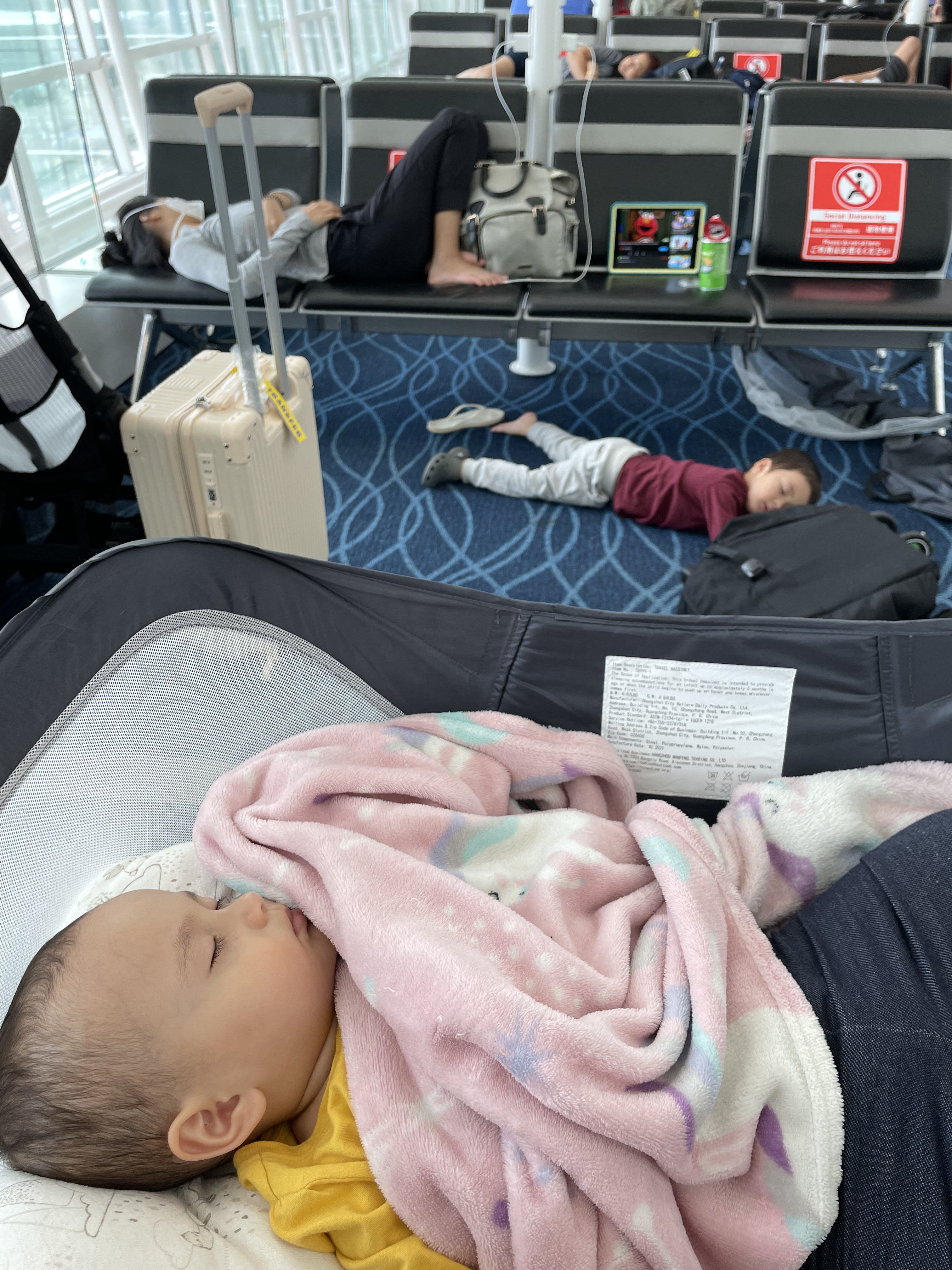
In Chicago, we boarded our flight for Maine but ended up waiting on the runway for 3 hours due to mechanical issues until the plane was finally towed back to the gate. Thankfully, we got on a late flight to Portland and landed at 11:45 PM, which gave me enough time to rush to the rental car service before it closed at midnight. We installed the carseats and loaded up everything into the car and drove to Boothbay Harbor. We arrived at 1:30 AM on Sunday morning putting our whole travel time at around 52 hours. At the AirBnb, we got the car unloaded. Khai took care of Alice and I put Aden to bed. While I didn’t intend to do so, I fell asleep next to him and I slept there all night.
I imagine now it’s more clear how I came up with the title for this blog post.
Our time in Maine was wonderful to connect with Jane, Patty, Ellen, Rick, Grandma Alice, Aunt Janet, and the whole FTD community. So much love and warmth (and seafood) to welcome us back to the States. After a magical week there, we got back to Baton Rouge on my birthday. While I typically wouldn’t see traveling with two kids and a bunch of luggage as desirable on a birthday, being home safely with my family was the best present. And that’s a special part of life, I suppose: Overcoming challenges and spending time with the ones we love.
Onward.

Traveling to learn
Posted on May 15, 2022 Leave a Comment
15 May 2022
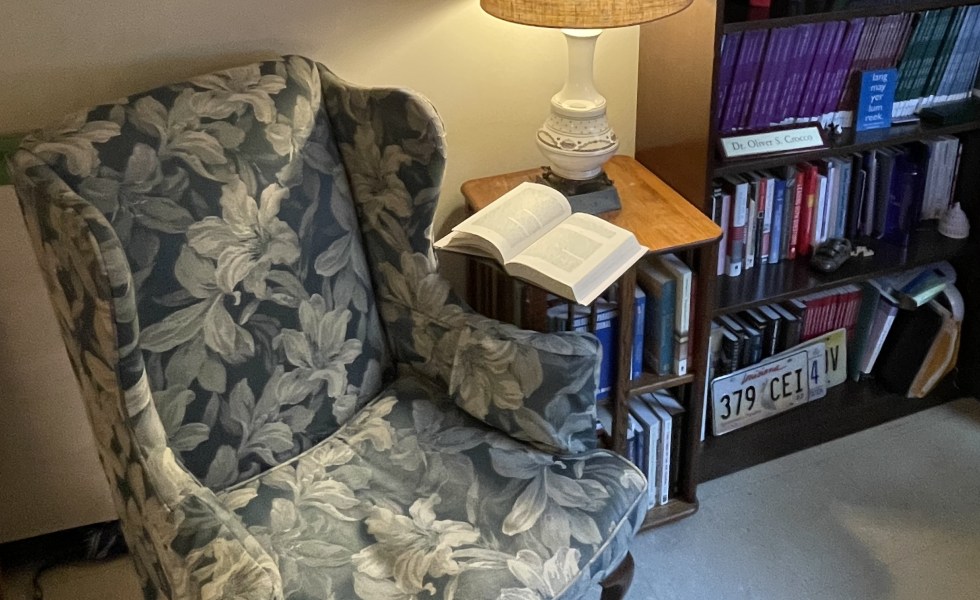
Sitting in my office reading chair –– a floral wingback that didn’t quite have a place in my house –– I decide to continue the book I’m reading before resuming grading. Thankfully, I have acquired the skill of reading for pleasure despite a haunting to-do list staring at me from my desk.
In a couple of days we are leaving for our study abroad program, Global Leadership in Thailand, and a passage from Amartya Sen’s memoir Home in the World resonates. He talks about the history of Nalanda University in India, which held classes over 1500 years ago (before Oxford or Cambridge) and was an exemplar of global higher education. Some think Nalanda was primarily the result of trade along the Silk Road, but Sen offers this rebuttal:
“If trade gets people together (and it certainly does), then so does the pursuit of knowledge and enlightenment. Mathematics, science, engineering, music and the arts, along with religious and ethical commitments, have prompted people to seek them across regions, by land and sea, over millennia. The motivation behind these journeys was not the pursuit of commercial gain, but the search for ideas – including, but not limited to, religious ideas. The huge modern popularity of seeing global connections through the prism of trade, of which the Silk Route is a leading example, should not be allowed to eclipse the fact that reflective engagements have motivated the movement of people across countries and regions for just as long. Globalization is the result not only of seeking business, but also of talking to – and learning from – each other.”
I love that phrase “reflective engagements.” It summarizes my perspective nicely. This study abroad trip — and many of the global components of my career — are motivated and fueled by reflective engagement. Something happens in the mind and spirit when we joyfully engage with new ideas, people, and places. Our brains light up and our egos cool down. While COVID has seen a rise in digital engagement around the world (I have meetings in Southeast Asia weekly), I wonder at the impact of the pandemic on our collective ability to learn from the world around us.
Onward.
Getting the Word Passed to Me
Posted on February 20, 2022 Leave a Comment
20 February 2022
I’m nearing the end of How the Word is Passed: A Reckoning with the History of Slavery Across America by Dr. Clint Smith. I heard of this book because the author was featured on the cover of the Harvard Graduate School of Education magazine this month. The book is narrative non-fiction and takes the readers on a journey to different sites throughout the U.S. that highlight how we learn and think about the legacy of slavery in this country. I was particularly drawn to the book because Smith is from Louisiana and two of the chapters spotlight locations in Louisiana: The Whitney Plantation and Angola Prison. The author utilizes his skill in poetry and education to gently but compellingly reflect on “how the word is passed” — a quote from one of his participants. I got my mom to start reading it. With my sister in town, we decided to drive down 45 minutes to visit the Whitney Plantation and see for ourselves.

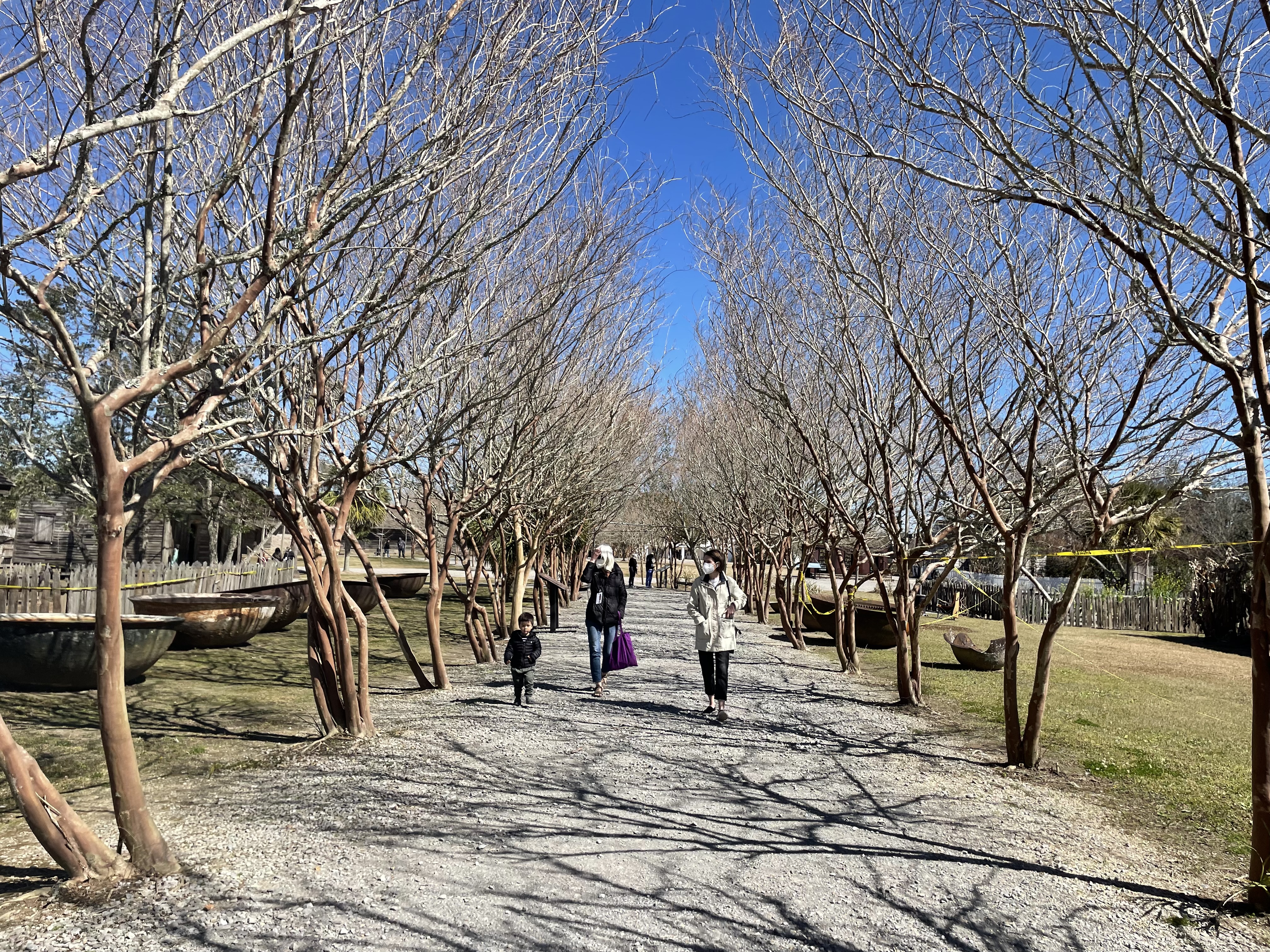
The plantation was renovated by a New Orleans trial attorney who bought it for other purposes but decided to turn it into a museum upon learning the story and significance of the location. As he read about the property, he found documents that put dollar values on each enslaved person and showed how one woman who had nine children in eleven years was labeled a “good breeder.” Enslaved women were commonly forced to have children with different enslaved men — whoever the master deemed most genetically favorable. Masters at plantations like this often raped the enslaved women themselves as well. The enslaved people had virtually no bodily autonomy, no education, and no rights. As the founder says, we learn deeply about the Holocaust and ponder its legacy and lessons. We must also do that for the history of slavery in this country.
As a relatively new father, it hit hardest thinking about the enslaved children. Many were sold and forced to leave their mothers, fathers, and siblings. At 10, they began working in the fields. Many died from disease, malnourishment, or abuse. They didn’t have the opportunity to play, learn about the world, and experience joy. The museum had statues of the children throughout and a memorial entitled the Field of Angels, which honors the 2200 enslaved children who died in St. John the Baptist Parish between 1823-1863.
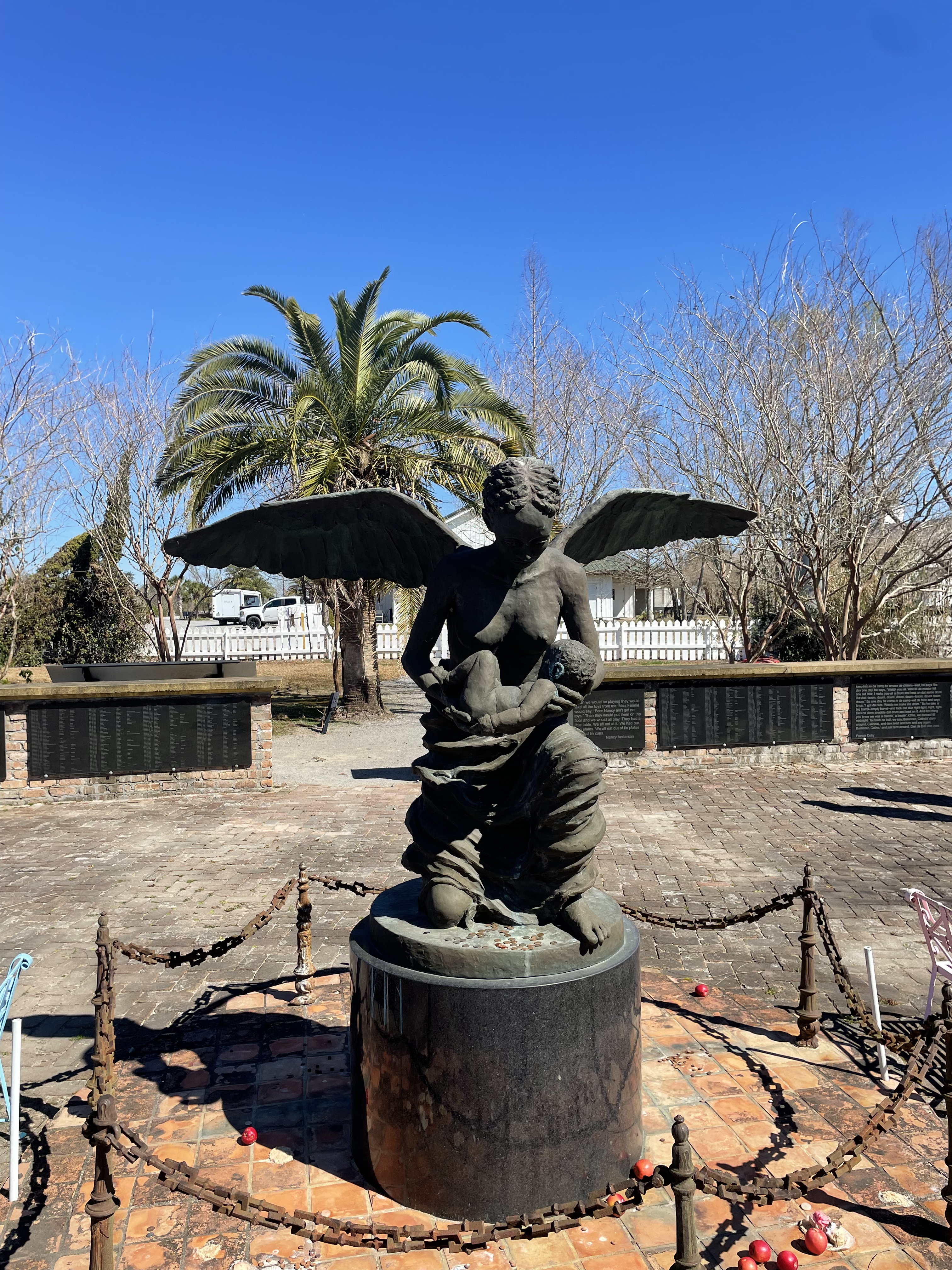
Dr. Ibramhima Seck, the Senegalese academic director of the Whitney Plantation and author of a book about the Whitney Plantation and slavery in Louisiana is one of the voices in the guided tour, which is available for free here. At the end of the tour Dr. Seck says, “If you leave the plantation feeling guilty or angry, that means I have failed in my mission. Because this museum is about educating people about the past. It may be a very painful past, but we cannot hide history. Hidden history hurts.” Perhaps Dr. Seck has failed slightly with me because I am quite angry, disappointed, and sad. I also feel gratitude to scholars like Dr. Seck and Dr. Smith who have contributed to my learning about the legacy of slavery in this country.
In my own work as a scholar of leadership and human resource development (HRD), it is clear to me that we must reconcile with the legacy of exploitation and slavery. Thinking about people as “capital” has fairly clear roots in slavery in this country, which is demonstrated in the book Accounting for Slavery: Masters and Management by Caitlin Rosenthal (Harvard University Press, 2019). Thinking about people as “resources” isn’t much better, unfortunately. I serve on the editorial board for Human Resource Development Review and I’m pleased to see they just published this powerful article by my colleague Dr. Jeremy Bohonos and Dr. ArCasia James-Gallaway on “Enslavement and the Foundations of Human Resource Development.” This should be required reading for all introduction to HRD courses. I recently reached out to Dr. Bohonos and he also recommended Slavery’s Capitalism: A New History of American Economic Development by Beckert and Rockman (University of Pennsylvania Press, 2018) and The Production of Difference: Race and Management of Labor in U.S. History by Roediger and Esch (Oxford University Press, 2014).
Even though my primary research interests are in Southeast Asia, I think it is incumbent on all of us to critically reflect on how slavery and exploitation have influenced (and continue to influence) how we think about human beings, work, and freedom.
Onward.
The Importance of Early Experiences in Scholarship
Posted on February 6, 2022 Leave a Comment
6 February 2022
Out for a run in my Baton Rouge neighborhood, I listen to a podcast by author and journalist Sebastian Strangio about his updated book on Hun Sen and Cambodia published by Yale University Press. I don’t typically listen to podcasts while running, but the lack of trails within running distance from my house and the drudgery of running up and down paved streets makes it a necessity. I miss the days of running for hours on the adventurous trails of Rock Creek Park in DC or around Doi Suthep in Chiang Mai. I trudge along the sidewalks with their cracks and ant hills as the Louisiana winter wind (about 13 degrees celsius) blows on my face. I listen to Strangio describe his early experiences after university when he moved to Phnom Penh and got involved in journalism. Even though he was young and inexperienced, he was given a lot of opportunity at the Phnom Penh Post and grew immensely as an author/journalist during his initial three-year stint.
Part of Strangio’s incredible success as an author is no doubt due to his brilliance (in the podcast, he gives lengthy, sophisticated responses jam-packed with detail). Still, I can’t help but think about the importance of those early professional experiences that gave him a complex cross-cultural environment full of challenges to cultivate his voice and sense of the world. He was given opportunities as a journalist in those days that most aspiring journalists in places like the US or Australia wouldn’t get for years.
Before leaving the house to go on my run I had just put down the autobiography of Charles “Biff” Keyes of the University of Washington who recently passed away. Born in 1937, Biff studied anthropology at Cornell and first went to Thailand in 1962 (just before his 25th birthday) to collect data for his dissertation. It’s so fun to read the story of Biff’s life as he mentions his influential early experiences in Thailand. The book is full of his interactions with people like David Wyatt and Konrad Kingshill (the latter of whom was instrumental in establishing Payap University where I worked for four years).
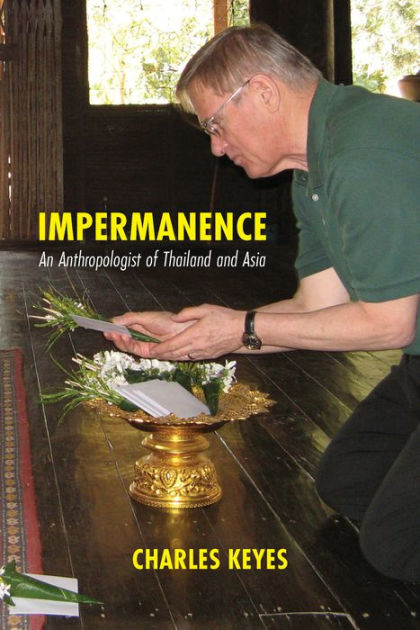
While I never had the chance to meet Biff Keyes and haven’t yet met Sebastian Strangio, their stories remind me of my own experience moving to Chiang Mai, Thailand at the age of 22. Having graduated in 2008 into a terrible job market, I spent the year working at my church and volunteering in the community and then moved to Thailand the spring of 2009. During my first two years there, I was given opportunities at Payap University to create programs, develop residential life policy, and even teach courses. Those experiences stretched and challenged me personally and professionally. After completing my master’s degree, I returned to Payap for two more years. I was fully thrown into the world of university life. I taught a full slate of courses in the International College, worked as the Head of International Campus Life, and contributed to a large-scale development project along the Thai-Myanmar border and inside Myanmar. Thankfully I kept a blog during my time there, which I occasionally crack open.
At the end of my run, I turn the corner and walk the final stretch to cool down and avoid getting sweat all over my kids. Eager to return to Southeast Asia, I feel somewhat like my wings are clipped by the pandemic, family, and the tenure track. Life isn’t quite as simple or free as it was. Running in straight lines around paved streets instead of through endless trails feels like an apt metaphor. I don’t let it get me down, though. I remind myself of how grateful I am to have had those four years in Thailand to shape my thinking, build relationships (including with my incredible wife!), and set me on the academic path. The last 4 years at LSU have allowed us to build a family and given me time and space to develop my scholarship. It’s been perfect. And I know it’s only a matter of time until I’m back.
Onward.
Recent work in Southeast Asia
Posted on January 19, 2022 Leave a Comment

19 January 2022
I’ve been fortunate to continue academic work in Southeast Asia despite (or because of) the global pandemic. Some of this has been the result of publishing my book, Developing human resources in Southeast Asia: A holistic framework for the ASEAN Community, which came out in September and has given me additional visibility in the space (click here to read the preface). I’ve also been increasingly engaged with the ASEAN Human Development Organization and the incredible work they’re doing to humanize the work of organizations in shifting away from speaking of people as “resources” or “capital.”
As I look back on the last few months, it’s been quite a packed time! Here’s a month-by-month recap:
In October, I shared my book at an Author Chat at the American Association for Adult and Continuing Education (AAACE) conference in Florida. I also gave a presentation on a discourse analysis project I’m working on that looks at the speeches of ASEAN Secretaries-General. (Later that month I also snuck in a trip to Saudi Arabia and delivered a workshop on employee self development, but I’ll write more on that in a standalone post.)

In November, I presented at the Academy of Human Resource Development-Asian Regional Association for Career Development (AHRD-ARACD) conference hosted by Universiti Putra Malaysia. I presented on “The role of culture in ASEAN: Implications for regional human resource development” which is one of my ongoing projects in the region. I also presented another paper with two colleagues on HRD in Malaysia. Since it was a virtual conference, I had to record a version of my presentation as a backup in case there were technical difficulties the day of the conference, so here is a copy if you’re interested:
Later that month, I presented a paper on regional leadership in ASEAN and the EU in response to the COVID pandemic at the Southern Management Association conference in New Orleans. While there, I reconnected with a scholar who asked me about HRD in Southeast Asia. We corresponded about my work in the region and he eventually invited me to be the HRD section editor for a new SAGE journal based in Singapore.
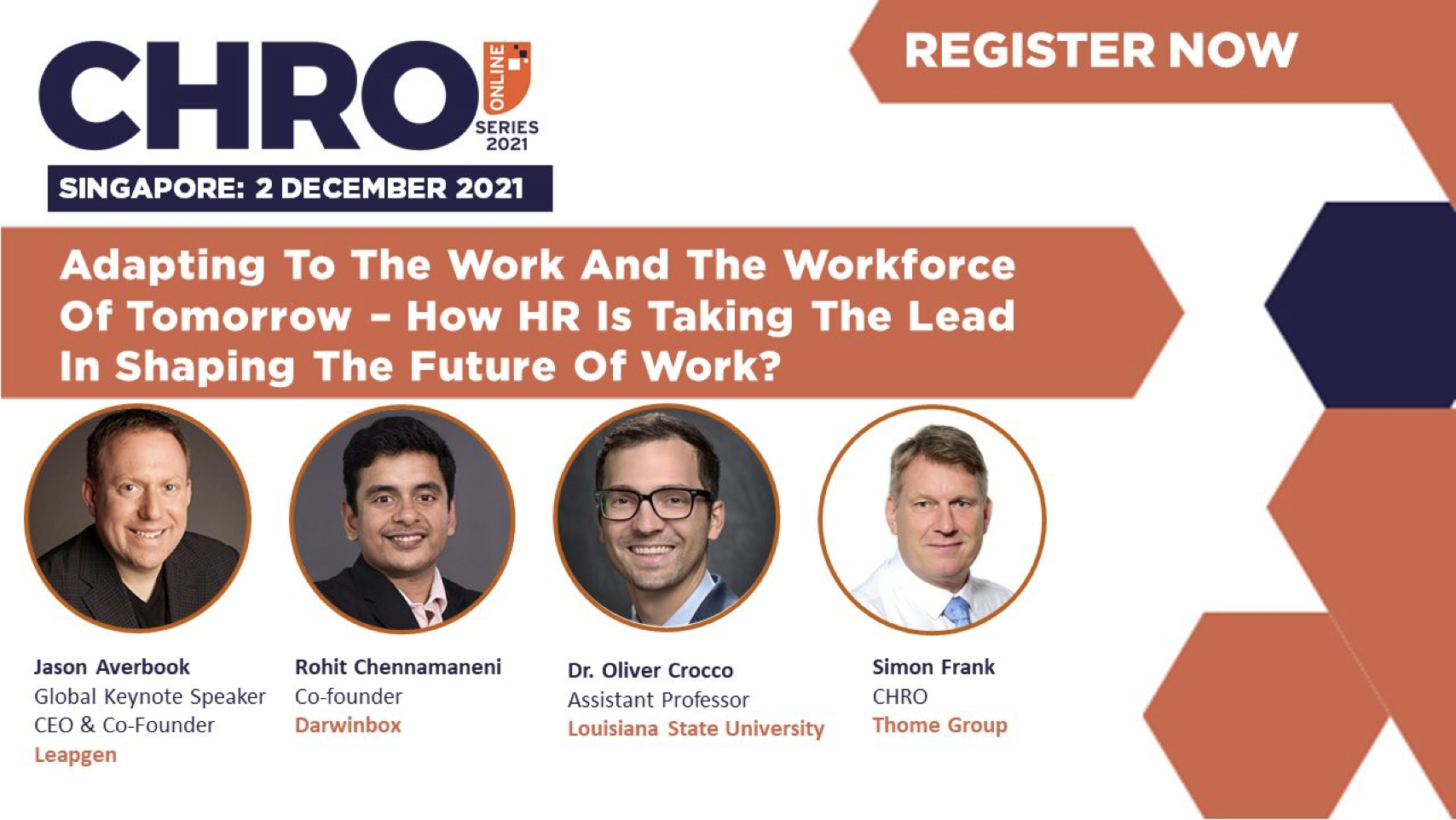
In December, HRM Asia invited me to speak on a panel for Chief Human Resource Officers in Singapore on the future of work and the workforce. I also wrote an article for HRM Asia based on my book called “The HR development ecosystem in Southeast Asia.” The panel went well. The other panelists were practitioners, so it was fun being the sole academic voice. My big takeaway was that the participants were excited to learn more but the format did not allow for much in-depth exploration of the topics. I had prepared some comments for the panel but barely had time to go into much depth.
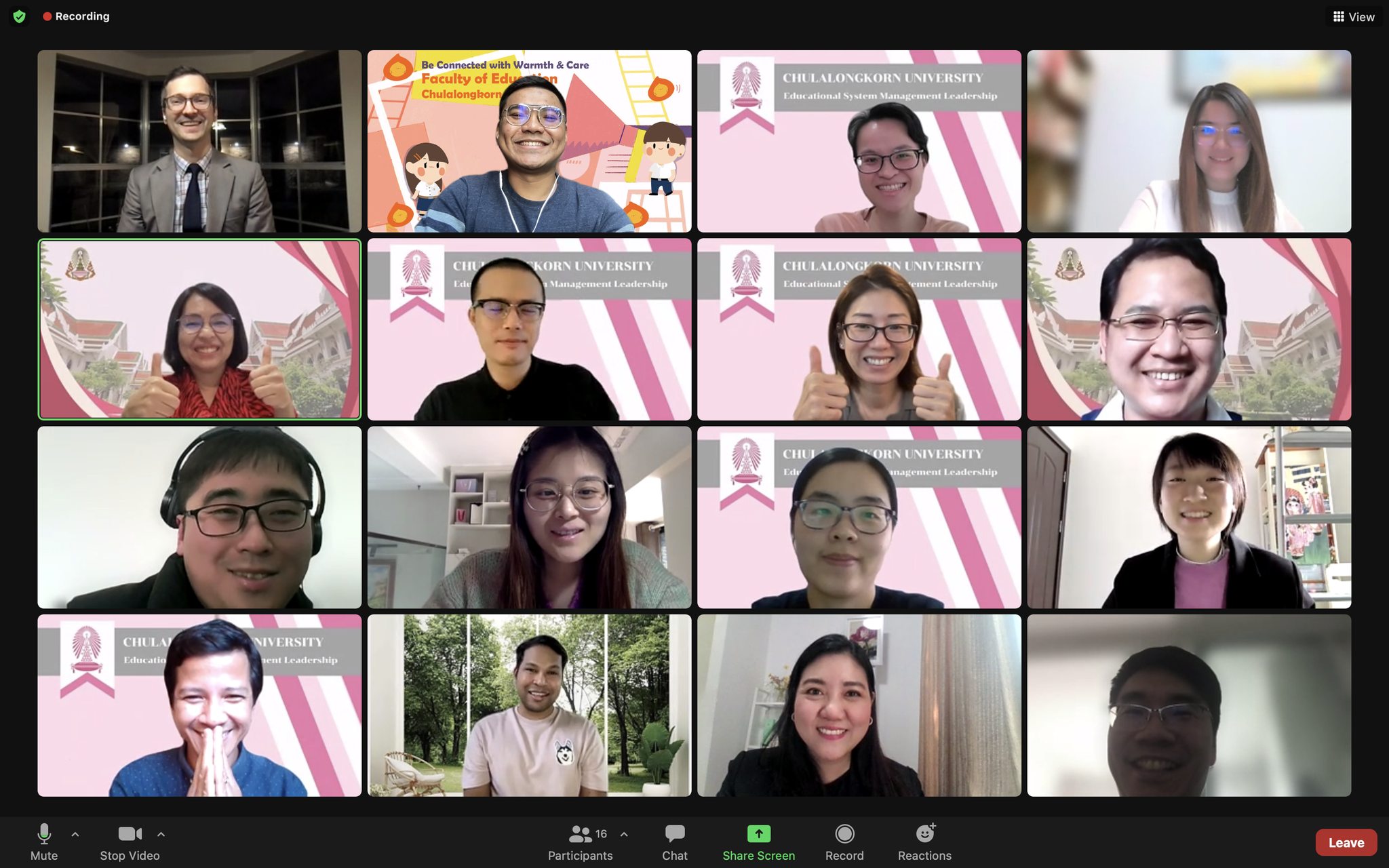
While my Global Leadership in Thailand study abroad program with LSU had to be postponed this December/January, I was still able to connect with Thailand when I served as a Special Lecturer for Chulalongkorn University in Bangkok this month. I taught 18 hours in a course for PhD students on HRM in Education. The class included students from Thailand, China, Cambodia, and Vietnam. I thoroughly enjoyed the experience and I even knew one of the students from my time at Payap University a decade ago. Great to see him thriving!
Taking time to reflect briefly on the last few months is a reminder of how grateful I am to be doing academic work related to Southeast Asia. Technology has made ongoing engagement with the region increasingly possible. That said, there’s nothing like face-to-face interaction, so I can’t wait to get back soon.
Onward.
2021
Posted on January 18, 2022 Leave a Comment
We certainly started off the year with a lot of expectations for positive change after a brutal 2020. Most of those expectations were met. Some not. That’s life.
As an extrovert, 2021 continued to be difficult with fewer opportunities to spend time with people. So many times I wanted to call up friends –– or people who might become friends –– and grab a beer, go bowling, hear a concert, have a BBQ. And we did our best. I played in the Baton Rouge Ultimate Frisbee league over the summer, which gave me a social, physical, and competitive outlet. We also took a trip to Boothbay Harbor, Maine for nearly two weeks and then spent the weekend in DC for our close friends’ wedding. It was during July, which was that strange, brief period of time when we were fully vaccinated but the delta variant hadn’t emerged. A contingent of our family joined us for a long weekend at the beach in Florida, which was just perfect.
The coolest thing about this year is that we managed to expand our family presence here in Baton Rouge. Most notably, we had Alice. My mom and brother Martin also moved here. Martin is doing his master’s at LSU in Leadership and Human Resource Development. While I don’t think I’ll get to teach him a class, I did guest lecture in one of his courses on International HRD. That makes two of my siblings that I’ve had the opportunity to teach (I taught Glory at Payap University in Thailand during her gap year). Having more family here has been a blast. Martin and I went to four LSU football games and we had an epic night in New Orleans over Thanksgiving!

Alice is precious. We named her after Khai’s grandma, Alice Zinkowski (Patty’s mom) and my dad’s mom, Alice Crocco. It’s such a great name. I’ve always loved British literature since taking Ms. Macmillan’s “Brit-Lit” course in high school, and Alice is a classic British name (despite roots in French and German). She is so different from Aden, which excites and humbles us. Most of what we thought we knew hasn’t applied to Alice. She didn’t like being swaddled and prefers to feed herself. She’s independent, smart, and social.
I finished my book and it was published this year, which was definitely a personal highlight. Like most of life’s accomplishments, I reveled in it for a while but quickly normalized the accomplishment. Write a book? Sure, no problem. Funny how our brains do that. Speaking of books, I’ve been reading a lot more these days. One of my favorite new authors is Cal Newport. I finished three of his books this year. The most recent one I finished, Digital Minimalism, inspired me to spend less time on social media and more time doing things I like. My Screen Time on my iPhone has shown that I’ve cut my time in half since reading his book.
We had to cancel our trip to Thailand this year as the Omicron variant spread around the world. This was extremely disappointing for me because I worked incredibly hard to get that course off the ground. I was also looking forward to Alice and Aden spending time with their Thai family. That’s okay. We’re already well into 2022, so we’ll take what we’ve got and keep moving forward. Life is so full. We are beyond fortunate.
Onward.
HRD in Southeast Asia – 25 May 2021
Posted on May 25, 2021 Leave a Comment

Hi all,
Apologies for the hiatus. I wrapped up my book manuscript on Developing Human Resources in Southeast Asia on May 1 and have been playing catch up. That said, there has been a lot going on in the world of HRD in Southeast Asia in the last couple of months.
- Labor protections for gig workers in Indonesia. Check out this piece in New Mandala on some of the issues facing gig workers. While many Southeast Asian countries have a vibrant informal economy, gig workers are a gray area that are largely unprotected from the whims of their employers who are competing for the lowest prices. This is especially important given that Indonesia’s ride-hailing app, Gojek, has just announced a merger with the the emerging e-commerce company Tokopedia. Clearly the emerging tech hub that is Southeast Asia will rely on harnessing the power of HRD to support the workforce needed.
- Remote work might actually help build relationships in the region. This Nation Thailand piece has an unexpected view on the topic of remote work in Southeast Asia: it can actually help build relationships. In a region where face-to-face interactions are vital to support the relationship orientation of individuals, remote work can actually help. The author points out the advantages of translation/interpretation software, saving time by having fewer meetings and commuting less, and overcoming challenges together. A lot could be written in this space in terms of what organizations in the region could do to take advantage of technology for remote working instead of wishing to return to the status quo.
- ASEAN must be transformed or replaced. That’s the title of a compelling Nikkei Asia article, which feels a little like “round and round we go” in the debate of ASEAN’s efficacy and purpose. However, I do think the times are changing and ASEAN has some big choices to make as an organization. “If ASEAN opts to maintain the status quo, it is destined for decline and disintegration.” Couldn’t agree more.
There are also some good academic articles out related to HRD in Southeast Asia:
- “Analysis of human resource development and planning as moderators of employee performance” by Arafat et al. (2021). Indonesian context.
- “Guidelines for the development of academic competencies In the new normal for lecturer of Rajabhat University, Thailand” by Sirivadee Wiwithkhunakorn et al. (2021)
- “Human capital quality development strategy in efforts to improve economic growth in Boalemo District, Gorontalo Province” by Alam et al. (2021)
- “Educational investment strategies for capacity building of Thailand’s tourism professions” by Pongpan Compan et al. (2021)
- “Model of human resource management and development with appropriate strategies for large-scale factories in Bangchan Industrial Estate in Thailand” by Ekkasit Sanamthong and Wattanasom Meksuwan (2021).
- “The challenges of human resource development in Indonesia” by Burgess et al. (2020)
The contexts of Thailand and Indonesia tend to dominate the literature in recent months but it’s clear that the need to develop the workplace knowledge, skills, abilities, and mindsets of people in Southeast Asia is only increasing as the region changes in response to COVID-19, the rise of Chinese influence, and most recently the challenges facing ASEAN re: Myanmar and threats to human rights and human life.
Onward.
From Writing to Reflecting
Posted on May 24, 2021 1 Comment

21 May 2021
I’ve been using the Monk Manual for my daily organizer (you got me, Instagram ads). Every day it asks what habit I’m focusing on. This spring I put “write” nearly every day as I had several large research deadlines including my book manuscript. Most mornings I woke up at 5:30 AM and drove to the office in the dark. Some mornings I’d swing through Starbucks for a triple venti vanilla latte. My most productive writing hours seemed to be 6-10 AM, and I often stayed until 3 or 4 PM. Like a gamer not leaving their seat to keep playing, I worked my way through protein shakes and a 48-pack of Costco Extra Strength Energy Shots (which I jokingly called “6-hour energy”). Not recommended.
Now, the semester is over, deadlines have come and gone. In the habit section of my organizer, I have been putting “reflect.”
The past three years of moving to Louisiana and working at LSU have been a whirlwind. At LSU, I’m a full participant in the tenure game, which involves making as many meaningful contributions to scholarship as possible in a 6-year time period. At home with Khai, we’re responsible for the learning, thriving, safety, and bodily functions of two humans and two furry ones. As a homeowner, I think about the lawn, the trees, the potential of flooding (yay, Louisiana…), the roof, and the trash/recyclables. Adulting. I’ve been so “busy” with these wonderful things (some less so) that I haven’t spent much time reflecting on my life’s purpose and meaning. I’ve been so in the weeds––sometimes literally––that I haven’t zoomed out to see the bigger picture.
Meaning and purpose also come to mind as many influential people in my life are retiring. My mother retired and moved to Baton Rouge. My father is retiring this summer. A longtime mentor from high school Gary DeBlasio is retiring in September. Reid Bates, the director of the School of Leadership and HRD at LSU, is retiring after a long career in the department. And a group of influential people are retiring from my alma mater, Whitworth University, including one of my most cherished professors and mentors, Jerry Sittser. Recently, I watched the retirement celebration for Jerry on Youtube. [I haven’t been back to Whitworth in over 5 years, which I regret immensely, especially because I missed my brother’s time there. We were all planning to go out for his graduation last May before COVID hit but never made it. Oh, how I wish I could have gone – met his friends, played frisbee together, eaten at his favorite restaurants… So unfortunate.]
As these exemplars of integrity, magnanimity, academic excellence, and societal impact retire, I wonder if I am living out the example they’ve set for me. While philosophically, intellectually, and personally I’m in a very different place than I was as an undergraduate at Whitworth, I wonder if I am using my skills, talents, and gifts in a way that honors the lives and legacies of those who have directly and indirectly invested in me. Am I taking time to reflect and reorient? Have I allowed myself to become too busy? More and more I see how life is an act of becoming, a set of changing seasons, and process of emergence. For now, I’m hoping to make a habit of reflecting more each day on my life and direction to honor those who have come before me, invest in those around me, and journey into the unknown.
Onward.
HRD in Southeast Asia – 26 February 2021
Posted on February 26, 2021 Leave a Comment
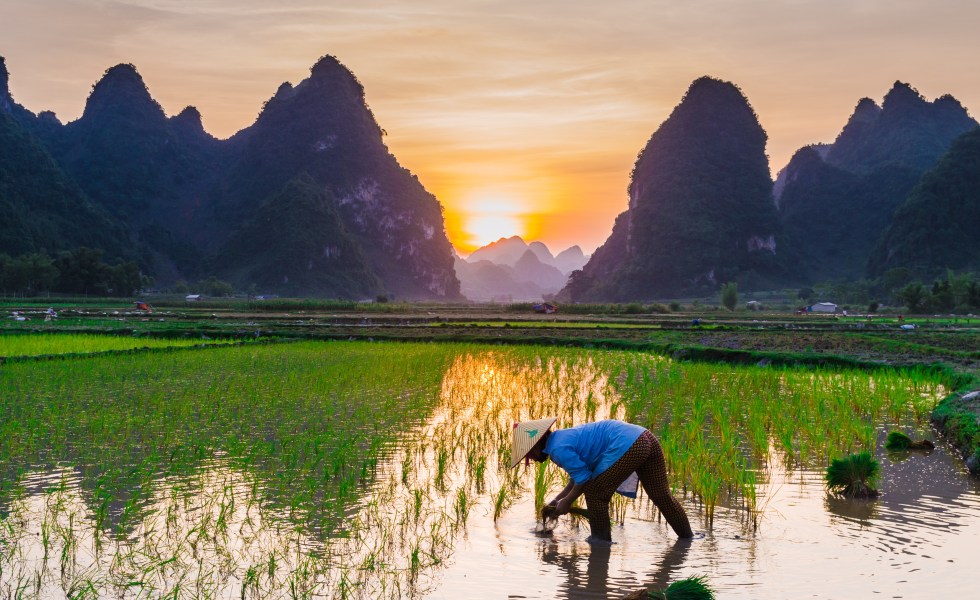
Hi all,
Lots of exciting things happening in the world of HRD in Southeast Asia. First of all, last week was the Academy of Human Resource Development annual conference, which was held virtually this year. I spoke on a panel coordinated by Gary McLean on HRD contextualization in Vietnam. I also presented a paper along with my colleagues Oleksandr Tkachenko, Loi Nguyen, and Victoria Jonathan on Regional HRD in Southeast Asia from a critical realist perspective. Overall, the conference was fantastic and I enjoyed the opportunity to connect with everyone. I am also beginning my three-year term as a member of the Board of Directors where I hope to build on existing efforts toward the internationalization of the Academy.

From ASEAN, we have a few interesting developments worth mentioning.
- ASEAN launched the “Regional Study Report on Labour Productivity in ASEAN” by Donghun Kim & KinChung Woon. The report has a lot of relevant analysis on HRD. Of particular interest to me are the policy recommendations around human capital development (HCT). The report offers a few key points, e.g., the need for an overarching regional HCT strategy. HRD would clearly play a role in supporting HCT in the region. This report has many implications, one of which is that it could even build to a kind of labor force productivity index for the region. This would have huge implications for HRD in the region as countries become aware of their labor productivity and then seek to build on their initial successes. Many things to think about in this report. Thankful to the authors for their hard work.
- The other big HRD-related update from ASEAN is the fifth edition of the “ASEAN Integration in Services”. This edition provides some useful updates on things like Mutual Recognition Arrangements (MRAs). The MRA for Tourism Professionals is making progress on becoming the 8th profession in the region with an MRA. More interesting to me is the progress on the ASEAN Qualifications Reference Framework (AQRF). As of now, four countries (Malaysia, the Philippines, Indonesia, and Thailand) have mapped their national qualification frameworks to the AQRF in a process called referencing. Others appear to be working on this. Huge implications for Regional HRD.
There have also been some great HRD-related scholarly articles published recently. Some of which highlight the contextualization of HRD in the Southeast Asian context. I don’t include my commentary on them here but I’ve included links for you to take a look.
- “Power distance as a moderator of the relationship between organizational justice and job satisfaction” by four Malaysian scholars – Nurshahira Ibrahim, Azman Ismail, Noor Azmi Mohd Zainol, Hilmi Azani Husain, and Yusof Ismail
- “Human resource development of Vietnam manufacturing industry. Support from Japanese organizations and firms” by Quynh Huong Nguyen
- “Job that fits for graduates in the ASEAN integration” by Glenn Velmonte.
- “A review on human resource management practices in Indonesia’s culinary SMEs” by Wa Ode Zusnita Muizu, Umi Kaltum, and Cattleya Rejito
The other big thing I didn’t mention yet is the military coup in Myanmar. This is devastating news for the people of Myanmar. While it appears a dark age of military rule is upon us, there are glimpses of hope in widespread protests and international solidarity. Even the fact that now most people have cell phones and internet (although there have been successful attempts to shut it down and censor the internet), this is a source of hope. The implications of the coup for HRD are yet to be seen but certainly I think about how the military control will continue to purposefully stunt HRD around the country as they’ve done in the past.
Onward.
HRD in Southeast Asia – 27 January 2021
Posted on January 27, 2021 2 Comments
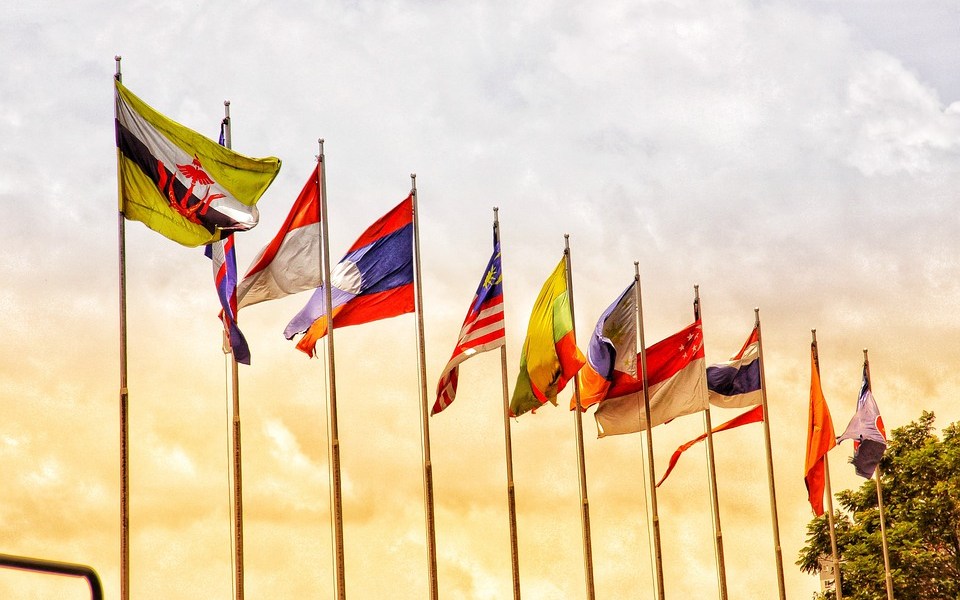
Happy New Year, everyone.
I’d like to share a series of posts related to human resource development (HRD) in Southeast Asia and ASEAN as a newsletter of sorts to collect updates, articles, thoughts, and resources related to HRD in the region. The advice to “write what you’d like to read” is my inspiration. As one of my research areas, HRD in Southeast Asia and ASEAN is ever-changing and complex. There are great resources and compelling insights popping up all over the world. I’ll do my best here to share a collection of them periodically.
- Webinar – Brunei’s ASEAN-Chair Outlook 2021. Indonesia’s Center for Strategic International Studies has done an excellent job leading dialogue on ASEAN and Southeast Asian studies. They regularly host webinars and post the videos (for those of us sleeping when they are live). While Vietnam’s Chairmanship of ASEAN in 2020 was absolutely huge for HRD (e.g., the ASEAN Declaration on Human Resources Development for the Changing World of Work), Brunei will be integral in updating the community blueprints and carrying out the existing work plans. This webinar does a great job sharing analysis from various speakers including Dr. Asyura Salleh of Brunei who is a Vasey Fellow at Pacific Forum.
- Article – Regional Human Resource Development: The Case of Southeast Asia and ASEAN. Since this is one of my research areas, I’ll also share a couple of my own recent publications including this article which expounds on the idea of Regional Human Resource Development (Regional HRD) using the case of Southeast Asia. I first presented about the idea of Regional HRD at the Academy of Human Resource Development international conference in Bangkok in 2018 along with colleague Oleksandr “Alex” Tkachenko. In this article for Human Resource Development International, we defined Regional HRD as “a collective vision with corresponding activities for human resource development carried out by a group of countries for the benefit of their individuals, organizations, communities, nations, and the region as a whole.”
- Chapter – Vietnam and Regional Human Resource Development in ASEAN. In collaboration with my Vietnamese colleague and friend Loi Anh Nguyen, we wrote about the interaction between National HRD and Regional HRD in the Vietnamese context. I should also endorse the entire book from which this chapter comes as a great example of scholarly exploration of National HRD of an individual country. My colleagues and I (which includes the addition of Malaysian scholar Victoria Jonathan) are doing a lot of thinking about how a region coordinates its HRD efforts. Exciting times ahead!
- Book – In the Dragon’s Shadow: Southeast Asia in the Chinese Century. I am finally getting around to reading Sebastian Strangio‘s 2020 book, which is just as excellent as many of the reviews have reported. I feel somewhat a kindred spirit with Strangio because we both moved to Southeast Asia at similar times. While he stayed in Southeast Asia as a journalist, I chose to move back to the United States for my academic training. Reading his excellent book makes me wonder who made the better choice. While not the point of the book, there are some important considerations for HRD in Southeast Asia as we consider the role of China and its growing influence, development projects, etc. I’ve written about the role of international organizations like the World Bank and Asian Development Bank, but Strangio reminds us of the role of the Chinese equivalent (Asian Infrastructure Investment Bank), which certainly has implications for Regional HRD in Southeast Asia.
- Article – Human Resource Development Factors and Organizational Values for Sustainable Employment in a Local Thai NGO. This article published by Oranuch “Jued” Preutipibultham of the National Institute of Development Administration (NIDA) in Thailand is another contribution toward understanding the role of HRD at the organizational level in Thailand. I’ve known Aj. Jued for several years now and have worked my way (with the help of my partner) through her Thai-language book (การปรับตัวในวัฒนธรรมลุ่มน้ำโขง CLMV (กัมพูชา สปป.ลาว เมียนมาร์และเวียดนาม) about Thai expats working in CLMV countries.
If you’re interested in HRD in Southeast Asia, I hope this post is useful to you. If nothing else, it’s helpful for me to collect ideas and follow current discourse.
Onward.
 Oliver S. Crocco