
2020: Our Year In Review
Posted on December 17, 2020 1 Comment
December 17, 2020
For most people around the world, 2020 has meant complete upheaval, stress, sickness, and death. I think of my brother who works at Whole Foods and is unable to work from home, my cousin who is an airline pilot in an industry among those hit the hardest, and my sister who quit her boutique business to homeschool her four kids. We missed graduations, weddings, and precious time with family and friends. Still, most of the people in my life will be okay. We have roofs over our heads and food to feed our families. Sadly, the same cannot be said for over 300,000 who have died from COVID-related causes and the many more sick, broke, and hopeless. My heart breaks for all those hurting around the world.
2020 has been brutal.
In fairness, nothing I have experienced this year could be considered hardship by most standards. As an academic able to work from home, I did not lose my job or benefits. Since my wife and I bought a house in 2018 and had a son (Aden) in 2019, we were able to spend most of 2020 together at home with our cat and dog. 2020 even gave us another little human on the way. At home, Khai and I played hundreds of games of Settlers of Catan, Carcassonne, and Dominion (the vast majority of which Khai won according to my detailed records). We watched the Great British Baking Show, See, and nearly every horror movie on Netflix. We tackled several big home projects and I read many good books.

Given the impossibility of international travel this year, it worked out perfectly that we spent time in Thailand with Khai’s family in mid-January after leading a Wintersession study abroad trip in Chiang Mai. Back in Baton Rouge, Khai and I decided early on that we would play it safe and wouldn’t risk close contact with others. FaceTime, Zoom, and Line allowed us to keep in touch with family and friends all over the world. At various times throughout the week, we felt transported to Chiang Rai, Bangkok, Kuala Lumpur, Riyadh, Pittsburgh, Trenton, Boothbay Harbor, Boston, Memphis, Spokane, and Washington, DC.
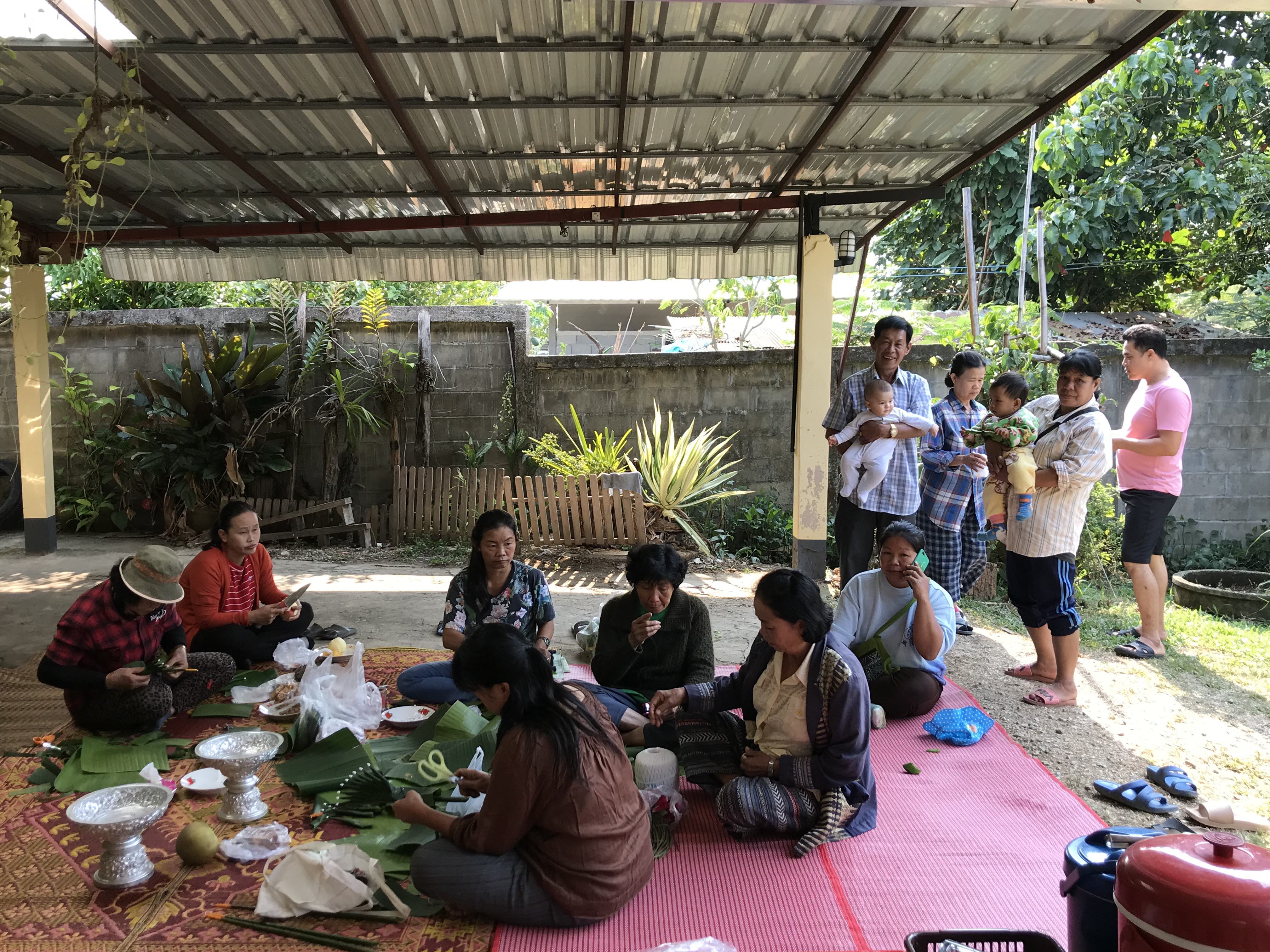
Since I was already pretty savvy with instructional technology/online teaching, it was a fairly smooth transition to take my work online. We turned our back room (previously the dog’s room) into an office with a desk and bookshelves from Facebook Marketplace. Working from home allowed me to support Khai and Aden more than usual. Many days Aden would play at my feet and make guest appearances in my online meetings. I could easily hop up from my desk to change diapers or play. While I worked from home during the week, I slipped away to campus on Sundays at 6:00 AM for marathon writing sessions. I’m so grateful to Khai for those writing days. I’ve learned to make sure I cook and clean on Saturdays, so Khai can focus on Aden when I’m gone. In terms of academic productivity, this year has by far been the best thanks to those Sunday sessions and my virtual writing group.


Thanksgiving was just the three of us. Christmas will also be just the three of us. I am sad Aden hasn’t been able to spend more time with his extended family. He lights up if we see another kid at Costco, which also makes me sad that he hasn’t been able to play with other children. But I know he’ll be okay. He’s among the luckiest. While he won’t remember 2020, our pictures, videos, and writing will show him that 2020 was nothing but pure family joy. In what strange world are both parents home all day, able to sing to their kid before every nap, read Thai and English books every night, eat almost every meal together, and go on walks together most days? Whether blessed by a higher power, privileged, lucky, or a combination, 2020 has not broken us.
Onward.
Coming back to writing
Posted on December 9, 2020 Leave a Comment
December 7, 2020
When I moved to Thailand in 2009, I kept a blog to keep in touch with family and friends and reflect on my experiences. After my first two years abroad, my sister self-published my blog into a book as a gift to me and wrote a kind forward. My writing certainly isn’t profound. I’m not particularly poetic or detail-oriented, but blogging has been a nice way to hold the people, places, and ideas in my mind’s gentle and fleeting grasp. This past weekend I stumbled on a copy of the blog book in the attic (what a cliché!) and it reminded me how much I enjoy writing.
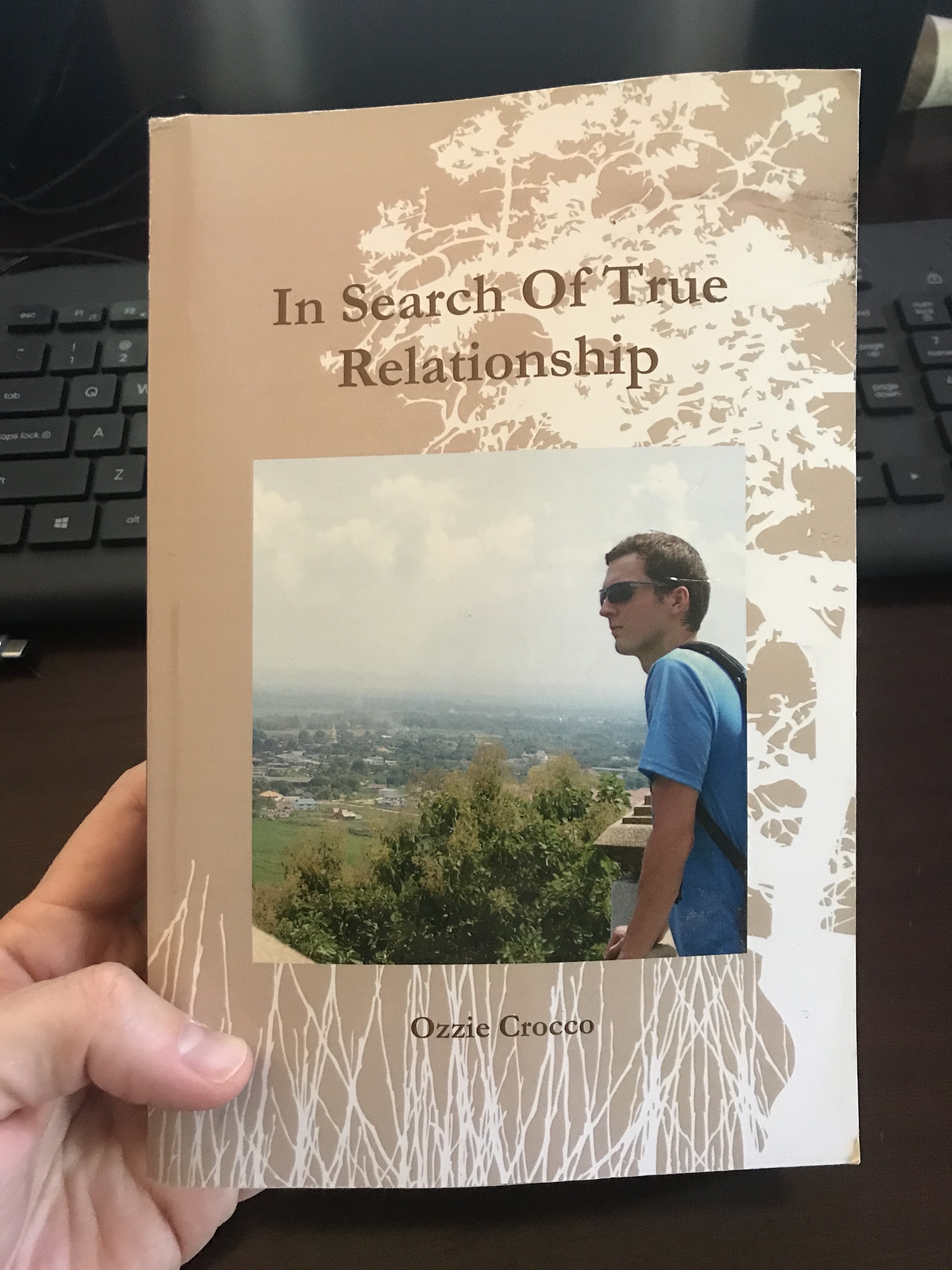
I kept my blog going through my master’s and back in Thailand until 2014 when I began my doctoral degree at the George Washington University. While I wrote occasionally during that time, my blog has more or less dropped off and I miss that time to reflect. I’ve kept up with my personal journalling but there’s something nice about sharing reflections in a more communal way. I’ve never been too fond about sharing lengthy posts on Facebook or Twitter.
I’d like to come back to a practice of writing. As I feel more secure in my role and work at LSU, I feel less the need to “brand” myself, virtue signal, or appease a certain following. I’m not writing this for my parents, friends, students, potential employers, or others. I do suppose, however, that part of my inspiration is my 1-year-old son and new baby on the way. Perhaps I am writing more for them. Either way, happy writing!
LSU Giving Day 2020
Posted on April 22, 2020 Leave a Comment
Hi everyone,
I put together this short video to show my support for LSU Giving Day! I know many of us are hurting right now given the current circumstances. If you’re finding that you have a little extra to support our students at LSU, please donate to the LSU Student Emergency Fund or other initiatives here: https://geauxgive.lsu.edu/
It’s a joy to be a part of the LSU community and I hope you’ll consider joining us in supporting our vision in Louisiana and beyond.
Finding Meaning at AHRD in Louisville
Posted on February 21, 2019 Leave a Comment
Last week was the Academy of Human Resource Development (AHRD) International Conference in the Americas in Louisville, KY. What a great conference! I’m so thankful for our warm and rigor-focused community in the Academy. This was my 4th AHRD conference in the Americas but it was my first time attending as a full-time faculty member at LSU, which gave it a different flavor. Colleagues from different universities around the world are quickly becoming friends.
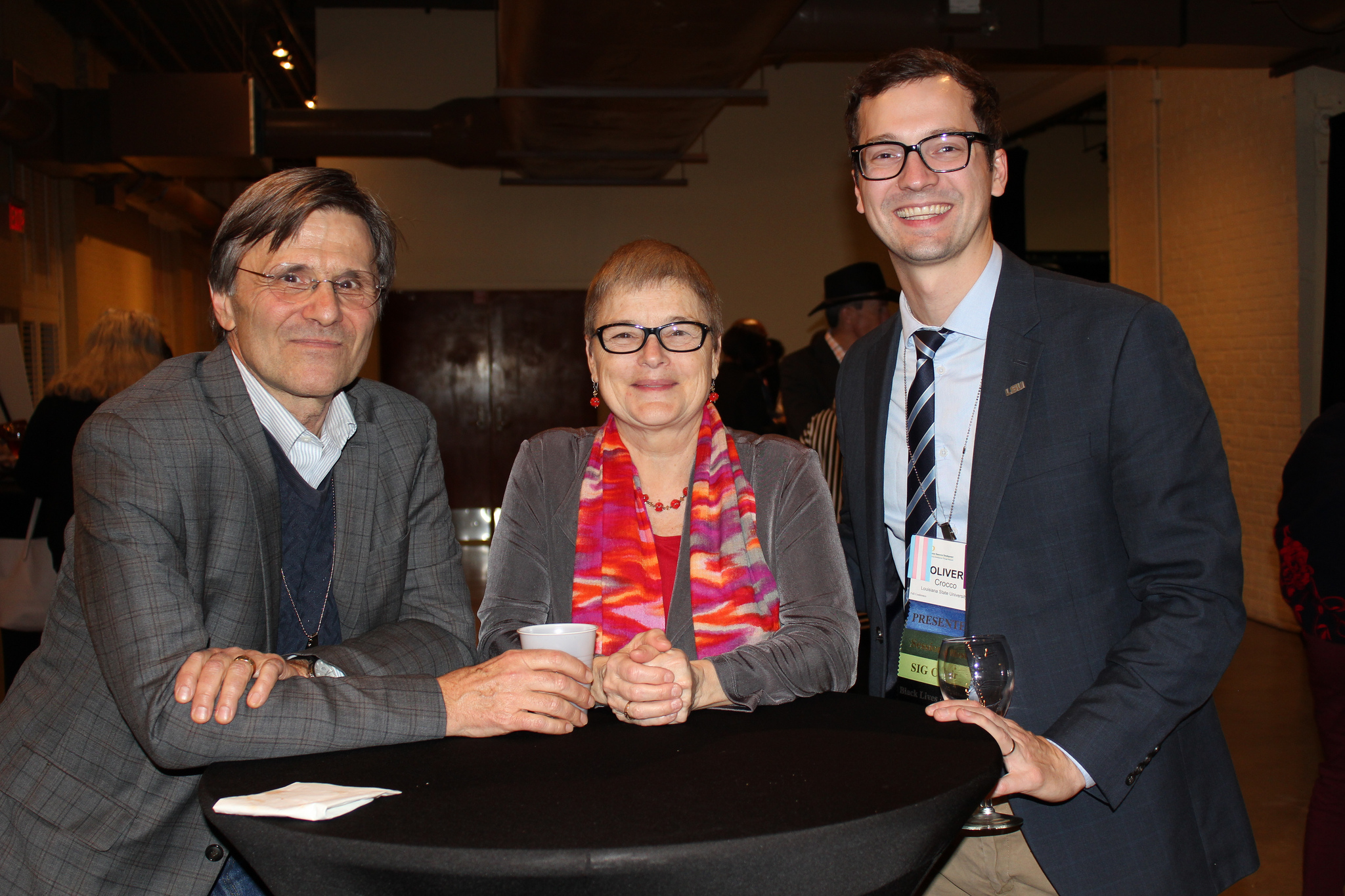
I had three presentations this year:
- PAPER: Crocco, O. S., & Cseh, M. (2019). Learning, development, and change in a community-based enterprise in Myanmar: Implications for human resource development.
- POSTER: Cseh, M., Crocco, O. S., & Safarli, C. (2019). Global human resource development informed by indigenous knowledge and research.
- PANEL: Cseh, M. Bartlett, K., Crocco, O. S., McLean, G., Russ-Eft, D., & Wang, J. (2019). Preparing HRD professionals for the global workplace: A holistic learning and development approach.
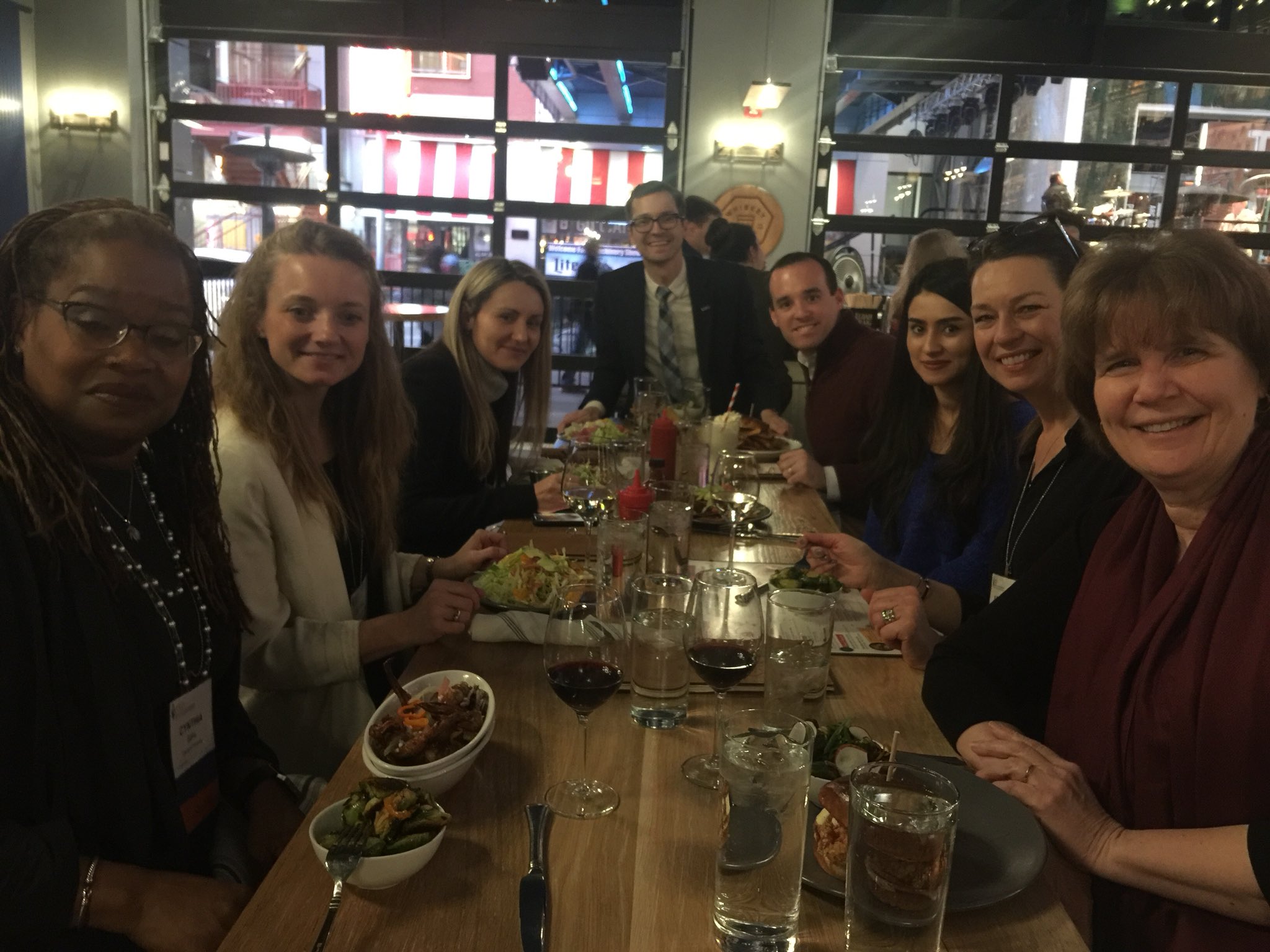
I also participated in several service opportunities like being a session host and appearing on a panel for the Graduate Student Research Colloquium. This year I became the Chair of the Leadership SIG as well. On Friday night the Leadership SIG had a fun night out with a small contingent of our 160+ total SIG members. I’m glad that our SIG is not just a place where we connect around our shared interest in leadership but also where we can grow as a community over food and drinks.
Representing LSU and the School of Leadership and Human Resource Development along with my colleagues Dr. Sunyoung Park and Dr. Shinhee Jeong added meaning to the conference as well. Both Dr. Park and Dr. Jeong were recognized for awards at the conference, and I believe we as a school are poised to make a big impact in the Academy and our field as a whole. Two of our graduate students (Susan Karimiha and Matthew Kingham) also attended and gave fantastic presentations. I’d like a larger group of LSU graduate students to attend in the future year. It’s such an important experience for our graduate students. We’re working on creating funding opportunities for our students at the department level to help more attend next year.
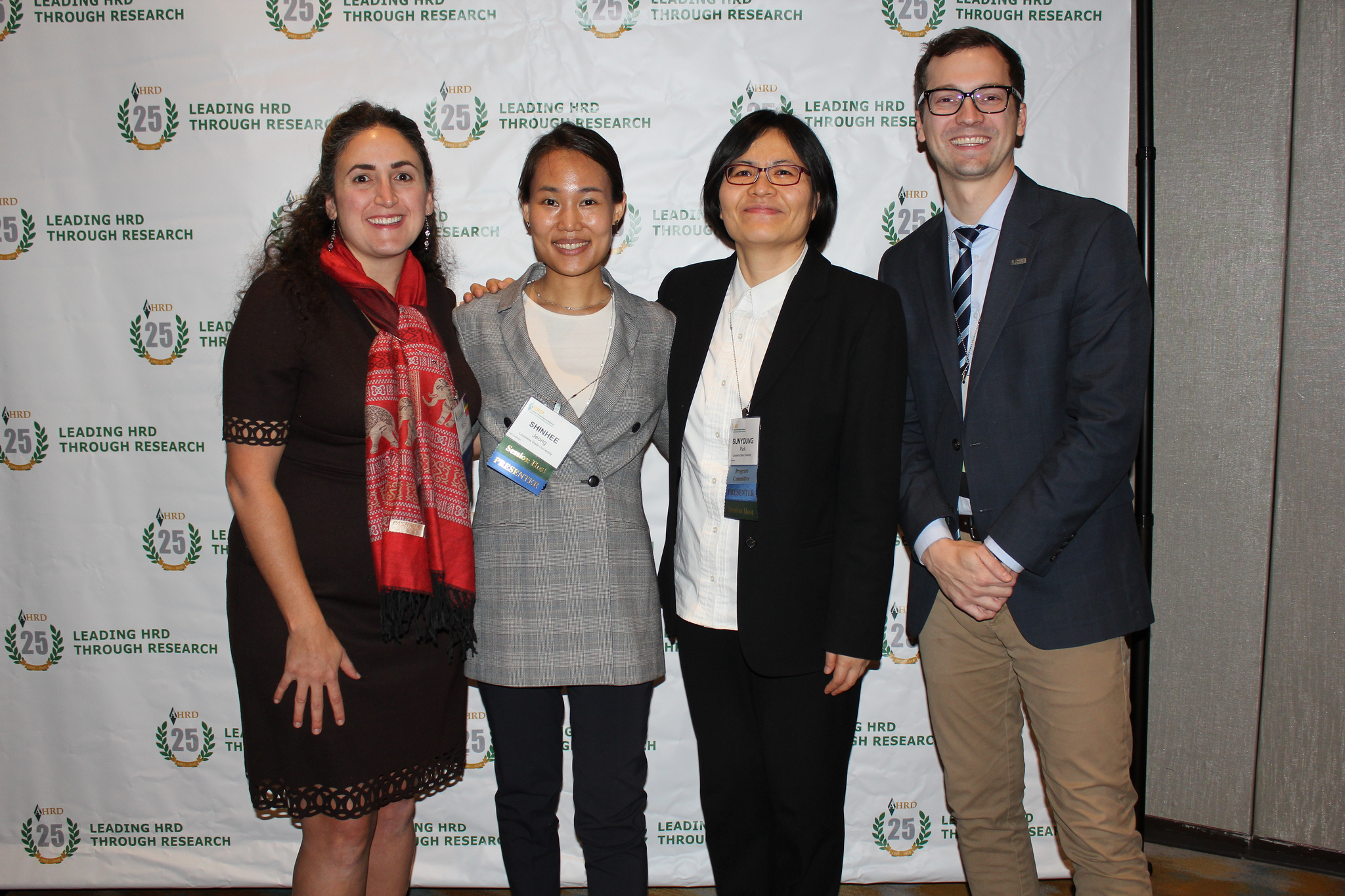
Being a part of the Academy is more than just sharing research and connecting with colleagues. It’s a synergistic community of courageous minds looking to promote scholarship and practice that honors the human spirit. I’m looking forward to the UFHRD conference in Nottingham in June but until then my heart and mind are full.
Social Learning in Myanmar
Posted on October 8, 2018 Leave a Comment
I recently returned from the 67th American Association for Adult and Continuing Education conference in Myrtle Beach, SC where I presented a piece of research from my dissertation on the role of social learning in a community-based enterprise in Myanmar where I did my field research. Social learning theory comes from Albert Bandura (1977) and says that people tend to learn by observing and interacting with behavioral role models.

Picture of Hpa An, Myanmar (not the site of dissertation)
In the organization I investigated for my dissertation, social learning was a catalyst for the diffusion of learning within the organization and contributed to organizational development and change. This is particularly important considering the political, economic, and cultural context of Myanmar where resources for learning and change have been limited.
This year was my first time attending at the AAACE conference, and I had a great experience. I attended excellent sessions on correctional education, online instruction, technology in adult education, e-portfolios, and the experiences of black female professors on the tenure track.
Education does not stop after high school or university. Lifelong learning is a vital mindset for a nation to thrive in continuously changing times. May we all embrace a posture that seeks to foster continual learning in ourselves and our communities.
Onward.
What competencies should every evaluator have?
Posted on September 17, 2018 Leave a Comment
I recently participated in a Webinar with the American Evaluation Association (AEA) where AEA Treasurer, Susan Tucker, and Task Force Chair, Jean A. King, shared about the development of evaluator competencies for AEA. It’s been a three-year process and the results are promising.
The new AEA competencies are an important addition to the Essential Competencies for Program Evaluators, which was published by Laurie Stevahn and others back in 2005 (See reference below). The six domains of that original competencies list were professional practice, situational analysis, reflective practice, systematic inquiry, project management, and interpersonal competence:

The five domains of the new AEA competencies include professional practice, methodology, context, planning and management, and interpersonal:
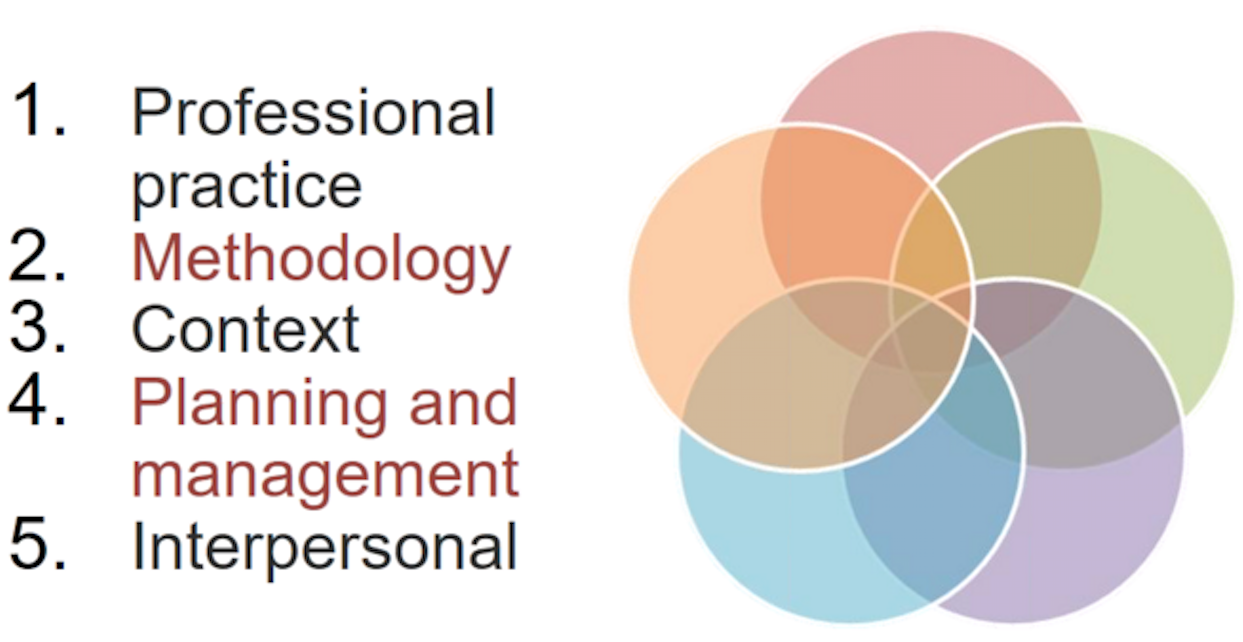
While the new domains map on fairly well to the previous framework, there appears to be some important nuance. I’ll post more once the specifics of the report are published, but in the meantime I will say I was very impressed with the presentation of the new domains.
They placed a strong focus on methodological rigor in evaluations recognizing that the evaluation context is inextricably tied to quality and rigor. The specific competencies in the domain of context that caught my mind were 3.4 – “Attends to systems issues within the context” and 3.7 – “Clarifies diverse perspectives, stakeholder interests, and cultural assumptions.” These represent a powerful shift in the evaluation world from overly simplistic causal models to understanding the complexity inherent in evaluating change efforts within complex systems.
While I won’t be able to attend the annual meeting next month in Cleveland, I’m looking forward to attending virtually. Some great things are happening in the evaluation world.
Stevahn, L., King, J. A., Ghere, G., & Minnema, J. (2005). Establishing essential competencies for program evaluators. American Journal of Evaluation, 26(1), 43-59.
Putting the value back in evaluation
Posted on September 3, 2018 Leave a Comment
How many of you have been asked to fill out an evaluation of a program, course, or training? In all likelihood, it was not a positive experience. For one, you probably felt that you were wasting your time as you either filled out bubbles or quickly jotted down a sentence or two of comments. If you put some thought into it, you might have wondered just how the results would be used, and perhaps doubted they would be used at all. Further still, you might have challenged the validity of the questions being asked. Are these even the right questions to improve this program?
I teach evaluation in human resource development at LSU and previously taught a master’s level course on assessing the impact of organizational change at the George Washington University. Both courses look at how to evaluate the impact and effectiveness of training programs and organizational change initiatives. It can be a difficult set of ideas to understand and see value in. Why spend so much time and resources evaluating what happened in the past? My students often have the tendency to want to diagnose organizational inefficiencies and offer recommendations for improvement without putting in the hard work of collecting and analyzing evaluative data.

We shouldn’t be surprised by this. Evaluation has a lot going against it. For one, we live in a progress-oriented culture that sees more promise in the future than in understanding the past. We ask, “shouldn’t we be innovating instead of spending time reflecting?” Yet, we fail to see how they are connected. We love the trial-and-error way of decision-making where we believe it’s more effective to try our next idea than it is to spend time and money learning about what went wrong with the first idea. We would rather rely on our intuition for the next best thing than on data about the past.
On the other hand, we’ve also seen plenty of downside to evaluation. Many of us have experience with so-called quality assurance and accountability measures with overly taxing paperwork and quickly corrupted metrics. Evaluations are often poorly-designed, not statistically meaningful, and/or distracting from one’s work. I short, evaluation is both completely neglected in some contexts and outright abused in others.
It’s my hope in my courses and this blog to put the value back in evaluation. I want to unpack some of the ways our culture seems to reject the role of evaluation on both a personal and organizational level. I also want to demonstrate ways in which evaluation is being misused and how those misuses can be remedied.
I want to build a movement that promotes an evaluation mindset. A mindset that includes qualities like curiosity, reflection, patience, and rigor. One with a series of habits and skills that one can build oneself and in one’s organization to unleash the positive power of evaluation.
Onward.
Emotionally intelligent leaders are more transformational, for the most part
Posted on December 14, 2017 Leave a Comment

If you’re like me, you probably picked up Daniel Goleman’s book Emotional Intelligence in the early 2000s after a third person recommended it to you. You thought it was fairly compelling but wondered about its academic rigor.

Since Goldman’s book was originally published in 1996, the idea of emotional intelligence has picked up some serious traction in both popular media and academic literature. In one form or another, emotional intelligence has made its way into the news, “must read” leadership book lists, and classrooms for over 20 years.
If you’ve paid attention to the academic literature, you know it’s been pulled in and out of articles on practically every topic from business to psychology, education, medicine and even 200+ articles in computer science. In fact, a quick search on Summon by Proquest for peer-reviewed journal articles since 1996 gets over 22,000 hits. One particularly interesting direction with the term (to me, at least) is how it relates to transformational leadership.
In case you’re not familiar with emotional intelligence, it can be described as:
“the ability to perceive, understand, and manage the emotions of both the self and others to accomplish personal and collective goals” (Kim & Kim, 2017, p. 380).
I cite Kim and Kim (2017) here because they’ve written a fantastic new article on emotional intelligence and transformational leadership. Hyejin Kim and Taesung Kim’s article is titled “Emotional intelligence and transformational leadership: A review of empirical studies” published in Human Resource Development Review, They take a close look at the connection between these two important concepts in the literature.
Transformational leaders are “those who encourage followers to increase their intellectual confidence, actively work to challenge the status quo and achieve higher performance, and pursue learning and development” (Kim & Kim, 2017, p. 381)
So, is there a connection between emotional intelligence and transformational leadership? Obviously, academics love black and white answers to life’s complex questions (my attempt at sarcasm) so the answer is a resounding, “for the most part.”
Kim and Kim (2017) narrow their review down to 20 empirical studies that investigate the relationship between these two constructs and find that 15 of them show a positive relationship between them. Across the five continents, various industries and age groups, the results of the 15 studies show that emotional intelligence is a “critical contributor” to transformational leadership behaviors (p. 387). The other five studies, however, found the connection is muddied by how emotional intelligence is measured. The biggest issue? Validity. Do the items on the assessments actually measure what they claim to?
The authors point out the common vicious cycle of no scholarly agreement on the definition of the term, which then makes it difficult to agree on a way to measure the term, which then makes it difficult to agree on a definition, which then makes it difficult to agree on a way to measure it…
Then again, rigid definitions lead to rigid conceptualizations. Don’t you love academia?
So, yes, for the most part it seems to be that emotionally intelligent leaders are more transformational.
Emotionally intelligent leaders are “more likely to effectively influence employees by providing visions, inspiring them, encouraging their pursuit of intellectual competence, and attending to their specific needs” (Kim & Kim, 2017, p. 387-388).
I think both constructs are vital to conversations around leadership and human resource development (HRD), so I’m glad to see Kim and Kim’s (2017) article. Now, it’s up to us as scholars to work towards improved definitions and operationalizations of these concepts.
Taking pride in what we do as scholars
Posted on November 30, 2017 Leave a Comment

With the grave implications of the Republican tax bill for graduate students and freedom of speech on campus under fire, it’s easy to get down on what it means to be a scholar today. That being said, the editorial in the August issue of the Academy of Management Journal (AMJ) provides some much-needed inspiration.
Markus Baer and Jason Shaw’s editorial “From the Editors – Falling in Love Again with What We Do: Academic Craftsmanship in the Management Sciences” is a cogent reminder to take pride in what we do as scholars. For those of you who don’t get the AMJ tome every two months, here are some highlights:
The authors think of scholarship as a craft and introduce the concept of “academic craftsmanship”:
We define ‘academic craftsmanship’ in the management sciences as the noble and socially responsible pursuit of perfection in creating new understandings about the world of organizations (p. 1214).
From this idea of academic craftsmanship, three important exhortations emerge.
1. Foster intrinsic motivation for what we do.
A research question that causes us to fall in love with our work is one that (a) needs answering (i.e. answering the question resolves existing inconsistencies in our understanding of a particular problem); (b) is worth answering (i.e. answering the question contributes to community or societal welfare); and (c) is personally meaningful so that we are willing to dedicate a significant portion of our lives to answering it, feeling excited while doing so (p. 1214).
How often do we fall into traps of researching what we think we should research to accomplish any number of extrinsic ambitions instead of following what we feel needs answering and is worth answering? The authors warn us how easy it is to be sidetracked by projects because a data source has become available or a new collaboration has emerged. But even the most thoughtful research agenda is fruitless if we don’t…
2. Take pride in our craft and work towards perfection.
Being an academic craftsman implies that we execute our work with the utmost care, striving for perfection every time… By dedicating ourselves to perfection, we develop a sense of psychological ownership of that which we are trying to understand (p. 1215).
I’ve heard seasoned scholars and journal editors forlornly describe the inordinate amount of low quality scholarly papers that cross their desks. No doubt this is partially the result of increased pressures to publish, but the authors of this editorial call us to take pride in our work and seek perfection in what we write. This is what academic craftsmanship is all about. The way we can do this is to…
3. Be rigorous and relevant.
Much time and attention has been paid to the rigor versus relevance debate in academic research. From our view, this debate is specious; the relevance of our contributions to society is inherently intertwined with our rigor (p. 1216).
Rigorous research should and must be connected to relevance to the social good. “A community of craftsmen should engender the best returns to society” (p. 1216). The authors warn that scholars should avoid the trending practice of dressing up existing concepts in new terminology. They call these terms “facade words” – neologisms that mask redundancies in the literature.
Maria Cseh and I have done research on this regarding all the various terms used to describe what it means to live and work effectively across cultures. The table below shows these terms alongside their number of scholarly journal articles found searching over 2 billion records using Summon by Proquest. This is not to say there aren’t meaningful differences in these terms. There are. But flooding the literature with comparable terms “makes it impossible for knowledge accumulation to occur” (p. 1216).
| Term/Construct | Total Scholarly Articles |
| Cosmopolitanism | 27686 |
| Cultural Competence | 22050 |
| Global Citizenship | 5573 |
| Intercultural Competence | 3850 |
| Multicultural Competence | 2073 |
| Cross-cultural Competence | 2041 |
| Cultural Intelligence | 1817 |
| Intercultural Sensitivity | 1551 |
| Global Mindset | 1279 |
| Global Competence | 974 |
| Cultural Mindset | 713 |
| Intercultural Effectiveness | 448 |
| World-Mindedness | 418 |
| Transcultural Competence | 295 |
| Cross-cultural Adaptability | 246 |
| Cross-cultural Intelligence | 41 |
| Multicultural Mindset | 22 |
| Intercultural Readiness | 20 |
| Cross-cultural Social Intelligence | 17 |
| Cross-cultural Mindset | 3 |
If scholars want to make meaningful contributions to academic literature, the authors of this editorial remind us, “there are no shortcuts” (p. 1216). It takes thoughtful consideration of research questions, a commitment to work towards perfection, and dedication to rigor and relevance.
What the heck is employee engagement?
Posted on October 17, 2017 Leave a Comment

We live in the age of personal branding where everyone is trying to find their niche, make their mark, and create something never before seen. Academia is not immune to this annoying tendency. A somewhat recent trend has revolved around the idea of engagement in the workplace. It seems there is a tangled list of terms like job satisfaction, organizational commitment, and work engagement, with perhaps the most trendy being employee engagement.
In a quick search using the GW’s Library database Summon by Proquest that searches over 2 billion records, I found over 1000 peer-reviewed journal articles published in the last five years with the phrase “employee engagement” in the title alone. And the term appeared over 18,000 times in any part of a journal article since it was introduced by William Kahn in 1990.
So what the heck is employee engagement?
Two recent articles provide some much needed clarity. The first is Shuck, Osam, Zigarmi, and Nimon’s (2017) article “Definitional and conceptual muddling: Identifying the positionally of employee engagement and defining the construct” published in HRDR earlier this summer. The second – coming from the first author’s award-winning dissertation – is “Exploring different operationalizations of employee engagement and their relationships with workplace stress and burnout” published in HRDQ by Anthony-McMann, Ellinger, Astakhova, and Halbesleben (2017). Both articles provide some much-needs insight into this question and I thought I’d share some of what I learned from these articles.
As mentioned above, employee engagement comes from Kahn (1990) who described what he called personal engagement as,
“…the simultaneous employment and expression of a person’s ‘preferred self’ in task behaviors that promote connections to work and to others, personal presence (physical, cognitive, and emotional), and active full role performances” (p. 700).
Both Shuck et al. (2017) and Anthony-McMann et al. (2017) point out that various frameworks have emerged on the topic including the needs-satisfaction, burnout-antithesis, job satisfaction, and multidimensional frameworks. It would be too cumbersome to go into depth on them all in this post but I encourage you to check out Anthony-McMann et al. (2017) for a nice summary of each just mentioned.
Okay, but still, what is it?
Shuck et al. (2017) review the literature and point out that employee engagement can be defined as,
“…a positive, active, work-related psychological state operationalized by the maintenance, intensity, and direction of cognitive, emotional, and behavioral energy” (p. 269) [those are their italics, not mine].
Now we’re getting somewhere. Employee engagement involves “an active pull toward performance” involving “proactivity, focus, and initiative“; it’s more of a state than a trait; it applies to one’s work; and, it can be measured by looking at people’s thinking, emotions, and behaviors (Shuck et al., 2017, p. 265-266).
The authors go on to compare employee engagement with other “engagement-type literature” and discuss how its meaning and place in the research is different from other constructs, which I encourage you all to check out if you’re interested (Shuck et al., 2017, p. 269). It’s quite a defense of the construct.
But how is it measured?
As you can imagine, there are several ways to measure it, but Anthony-McMann et al. (2017) use the ISA Engagement Scale, which stands for the three types of engagement measured by the scale: intellectual, social, and affective engagement. In their article, the authors test to see how these three measures of engagement are related to workplace stress and burnout. They provide a lot of interesting findings on employee engagement as it relates to workplace stress and burnout, but perhaps the most fascinating to me was an implication around social engagement:
“…the most important engagement-related initiative an organization can undertake might be one in which leaders, coworkers and peers are trained on how to create and foster environments conducive to the development of positive relationships at work” (p. 189).
Terms like employee engagement easily fall prey to what Shuck et al. (2017) call “blatant misuse of terms and unwillingness of researchers to use terms in the way they were intended (and developed in seminal works)” (p. 277). Thus, it is vital that researchers continue to embed their research within operationalized constructs developed by seminal authors. Deviating from this may appear innovative or trendy but will leave readers confused as to what the heck we’re really talking about.
 Oliver S. Crocco