HRD in Southeast Asia – 27 January 2021
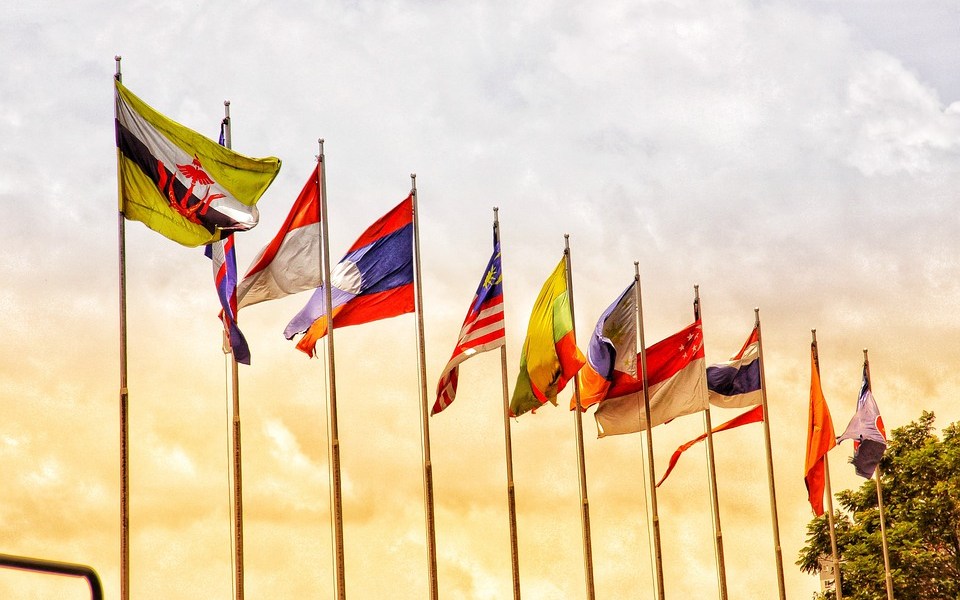
Happy New Year, everyone.
I’d like to share a series of posts related to human resource development (HRD) in Southeast Asia and ASEAN as a newsletter of sorts to collect updates, articles, thoughts, and resources related to HRD in the region. The advice to “write what you’d like to read” is my inspiration. As one of my research areas, HRD in Southeast Asia and ASEAN is ever-changing and complex. There are great resources and compelling insights popping up all over the world. I’ll do my best here to share a collection of them periodically.
- Webinar – Brunei’s ASEAN-Chair Outlook 2021. Indonesia’s Center for Strategic International Studies has done an excellent job leading dialogue on ASEAN and Southeast Asian studies. They regularly host webinars and post the videos (for those of us sleeping when they are live). While Vietnam’s Chairmanship of ASEAN in 2020 was absolutely huge for HRD (e.g., the ASEAN Declaration on Human Resources Development for the Changing World of Work), Brunei will be integral in updating the community blueprints and carrying out the existing work plans. This webinar does a great job sharing analysis from various speakers including Dr. Asyura Salleh of Brunei who is a Vasey Fellow at Pacific Forum.
- Article – Regional Human Resource Development: The Case of Southeast Asia and ASEAN. Since this is one of my research areas, I’ll also share a couple of my own recent publications including this article which expounds on the idea of Regional Human Resource Development (Regional HRD) using the case of Southeast Asia. I first presented about the idea of Regional HRD at the Academy of Human Resource Development international conference in Bangkok in 2018 along with colleague Oleksandr “Alex” Tkachenko. In this article for Human Resource Development International, we defined Regional HRD as “a collective vision with corresponding activities for human resource development carried out by a group of countries for the benefit of their individuals, organizations, communities, nations, and the region as a whole.”
- Chapter – Vietnam and Regional Human Resource Development in ASEAN. In collaboration with my Vietnamese colleague and friend Loi Anh Nguyen, we wrote about the interaction between National HRD and Regional HRD in the Vietnamese context. I should also endorse the entire book from which this chapter comes as a great example of scholarly exploration of National HRD of an individual country. My colleagues and I (which includes the addition of Malaysian scholar Victoria Jonathan) are doing a lot of thinking about how a region coordinates its HRD efforts. Exciting times ahead!
- Book – In the Dragon’s Shadow: Southeast Asia in the Chinese Century. I am finally getting around to reading Sebastian Strangio‘s 2020 book, which is just as excellent as many of the reviews have reported. I feel somewhat a kindred spirit with Strangio because we both moved to Southeast Asia at similar times. While he stayed in Southeast Asia as a journalist, I chose to move back to the United States for my academic training. Reading his excellent book makes me wonder who made the better choice. While not the point of the book, there are some important considerations for HRD in Southeast Asia as we consider the role of China and its growing influence, development projects, etc. I’ve written about the role of international organizations like the World Bank and Asian Development Bank, but Strangio reminds us of the role of the Chinese equivalent (Asian Infrastructure Investment Bank), which certainly has implications for Regional HRD in Southeast Asia.
- Article – Human Resource Development Factors and Organizational Values for Sustainable Employment in a Local Thai NGO. This article published by Oranuch “Jued” Preutipibultham of the National Institute of Development Administration (NIDA) in Thailand is another contribution toward understanding the role of HRD at the organizational level in Thailand. I’ve known Aj. Jued for several years now and have worked my way (with the help of my partner) through her Thai-language book (การปรับตัวในวัฒนธรรมลุ่มน้ำโขง CLMV (กัมพูชา สปป.ลาว เมียนมาร์และเวียดนาม) about Thai expats working in CLMV countries.
If you’re interested in HRD in Southeast Asia, I hope this post is useful to you. If nothing else, it’s helpful for me to collect ideas and follow current discourse.
Onward.
 Oliver S. Crocco
Thanks for sharing Ozzie. Good stuff!
Jane F. McBride Co-Founder Friends of Thai Daughters, Inc. Chiang Rai, Thailand Thai mobile: +66 (0) 81660 8127 US mobile: +1.339.222.1807 http://www.friendsofthaidaughters.org
Preventing child trafficking with education, shelter and love
>
LikeLiked by 1 person
Thanks so much, Jane!
LikeLike